Innovating and Adapting Education to COVID-19 at Nova Pioneer

We all know too well about the proverbial first 100 days of a president’s assumption of office. Across the world, this is marked as a transitional period that sets the tone for the rest of his or her term. It is easy to predict how easy/hard the ride will be

We all know too well about the proverbial first 100 days of a president’s assumption of office. Across the world, this is marked as a transitional period that sets the tone for the rest of his or her term. It is easy to predict how easy/hard the ride will be based on what is done within these key days.

It has been a few days over the 100 mark since our schools were closed as a result of the COVID-19 quarantine and lockdown measures across both Kenya and South Africa. A lot of us can agree that there’s something about the past 100 days that seemed to make time fly by so fast. Changes to how we live our lives have been implemented at record speed leaving us with the age-old question of how we are adapting to and adopting the changes. 

While change is set to be the only constant as we continue grappling with what our new normal will look like, it is an interesting time for the education sector across the world. As our key players: teachers, students and parents take stock of what the changes mean for the future and how we can continue to make sure that we are as prepared for the same.

Nova Pioneer Connect hosted a much-needed conversation on 26th June 2020 about how our Nova Pioneer community continues to respond to the times ahead with our Co-founder and Director, Christopher Khaemba, our Chief of Schools, Rahel Wondwossen, our Operations Leader for South Africa, Ofentse Lekwane, our students, Vahin (Grade 10, Nova Pioneer Senior School, Ormonde), Michelle (Form Three, Nova Pioneer Tatu Girls) and a parent Dr. Emily Too (Nova Pioneer Boys, Eldoret) the discussion centred around key lessons we have learned and how our South African team is handling the 2nd week of schools reopening.

Click on the link below to catch the rest of the conversation.
Kenya Science and Engineering Fair

Nova Pioneer students recently participated in the Kenya Science and Engineering Fair (KSEF) formally known as Science Congress, 57th Edition at the county level. Four Nova Pioneer work groups emerged top four out of 39 schools in the specific categories. We dive deeper into the top-ranked project in the Agriculture

Nova Pioneer students recently participated in the Kenya Science and Engineering Fair (KSEF) formally known as Science Congress, 57th Edition at the county level. Four Nova Pioneer work groups emerged top four out of 39 schools in the specific categories.

We dive deeper into the top-ranked project in the Agriculture category: The Automatic Chicken Drinker. Amor Rehema and Michelle Adika (Form 2) tell us more about their project and their thoughts behind it. 


What is your project about and what is the aim?

Our project is simply a chicken drinker. What makes it unique? it is automatic and time-saving. Our main aim for this project is to reduce the amount of time a farmer would take to re-fill the currently used system, hoppers, and recover the energy wasted for chicken drinkers.


What are some limitations of your solution?

A challenge we have faced in our project is finding a way to make this economical for the farmers by restructuring it to function without a constant supply of water. We had a few challenges in making improvements on the drinker to make it suitable for chicks to use especially because they can easily jump into the basin and completely block water flow.


What Inspired you to come up with this project?

As two aspiring scientists who had just learned the Hooke’s law, we were eager to apply our newly found interest. We heard about KSEF and when given the opportunity we signed up with no project in mind yet. Since we are both in the same table group, we came up with different ideas that we found impossible before realizing that if you stretch a spring and have something to block the end, it can stop the flow of a liquid in a container. We knew nothing about agriculture but applied the Physics we knew and hoped it would improve the agricultural field.


Have you implemented any feedback from the last round?

Our project was initially taller and we were advised to make the stand shorter for it to be more realistic we applied this and the project now is more practical and easier to understand.


What are your aspirations for this project?

Kenya is aspiring to be an industrialized middle-income country by the year 2030. If we manufacture such simple innovations, this goal will be attained faster than we think. We hope to get to the international fair and compete with great minds and projects. We also hope to get academic scholarships and for the government and farmers to actually consider our idea and improve it. We want to change the world not because we were taught that we must but becomes we can.

Computing and Robotics Fair

Nova Pioneer students from our Tatu City Girls Secondary School campus recently took part in the Annual Computer and Robotics Fair. Our young Novaneers showed up and showed off bringing back three big victories.   A platform for techies In 2017, the Alliance High School ICT club launched its Annual

Nova Pioneer students from our Tatu City Girls Secondary School campus recently took part in the Annual Computer and Robotics Fair. Our young Novaneers showed up and showed off bringing back three big victories.


A platform for techies

In 2017, the Alliance High School ICT club launched its Annual Computer and Robotics Fair. The event is aimed creating a platform for, and bring together, high school students who are passionate about tech. Young techies come together to share solutions around various social problems using technology.


A roaring success

The 2nd annual computer and robotics fair was held on 25 May 2019. Teams from different schools registered their projects by submitting a pitch video on YouTube and sharing the link with the event organizers.

The categories of the projects were:

  1. Software (Python, Visual Basic)
  2. App development (Android, iOS, Windows)
  3. Hardware (Robotics, Arduino, Raspberry Pi, Intel)
  4. Web technologies


Celebrating our wins

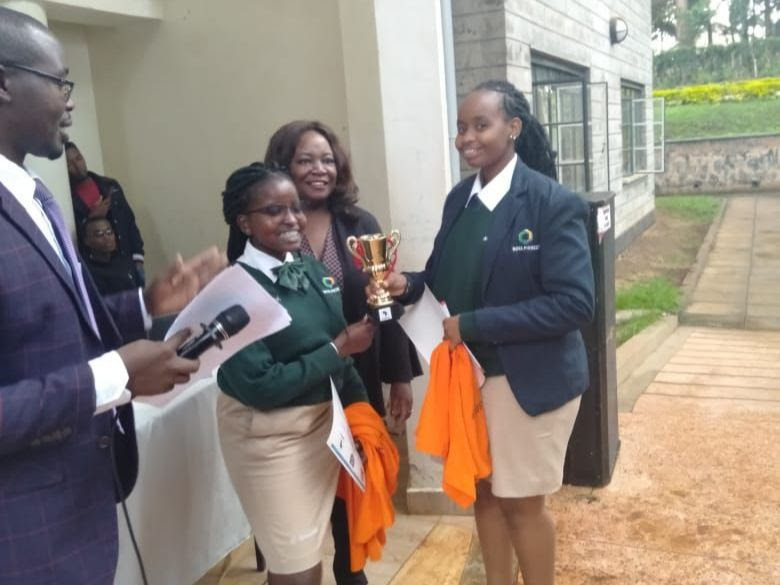
One of the groups receiving a trophy.

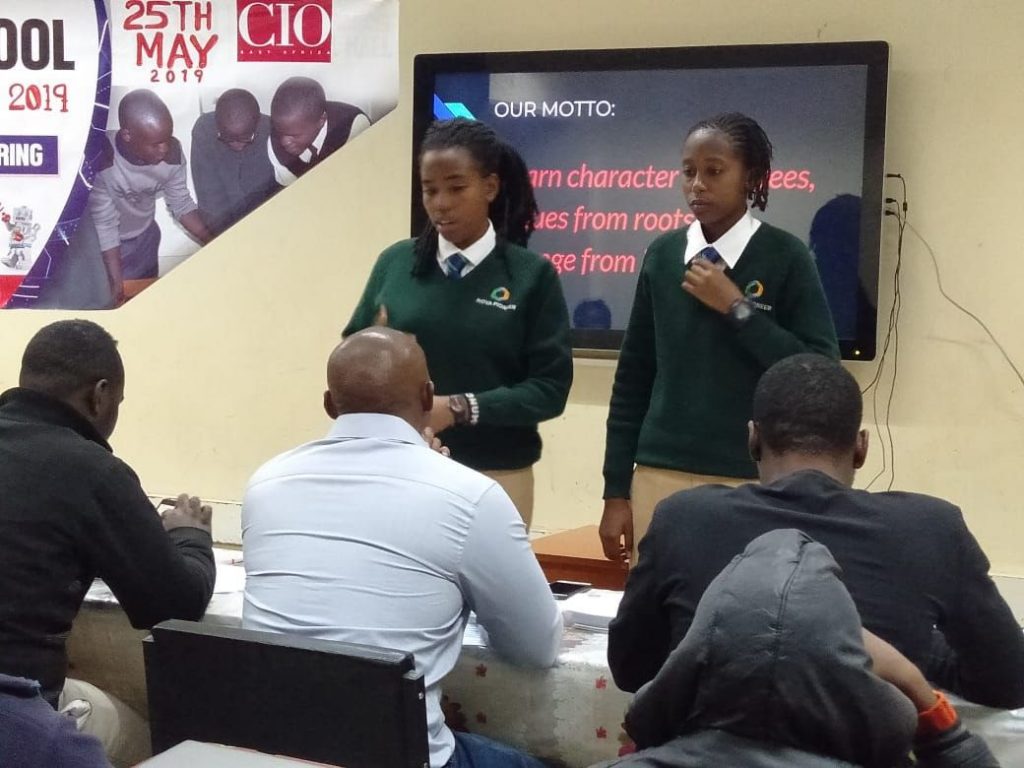
At the fair, the student groups gave a 3-minute pitch to industry experts within their categories. Our young ladies were quite the champions this year, bringing back three big victories! They swept trophies for:

  1. Third best school in the competition.
  2. Best girls school in computing and robotics.
  3. Best software project – second place.


One of the groups pitch their project to the judges

We have celebrated lots of wins in tech this year and this is a testament to the hard work and creativity our girls have put in to ensure they are using their knowledge and access to technology to better our society

Little Einsteins

Some of our Grade Four students recently participated in the annual Little Einstein Science Fair at Aga Khan High School. The little Novaneers wowed the crowd and scooped the first prize in “Clarity of Expression” for their innovative project dubbed “The Lemon Battery”.    Inspiring the next Generation of science

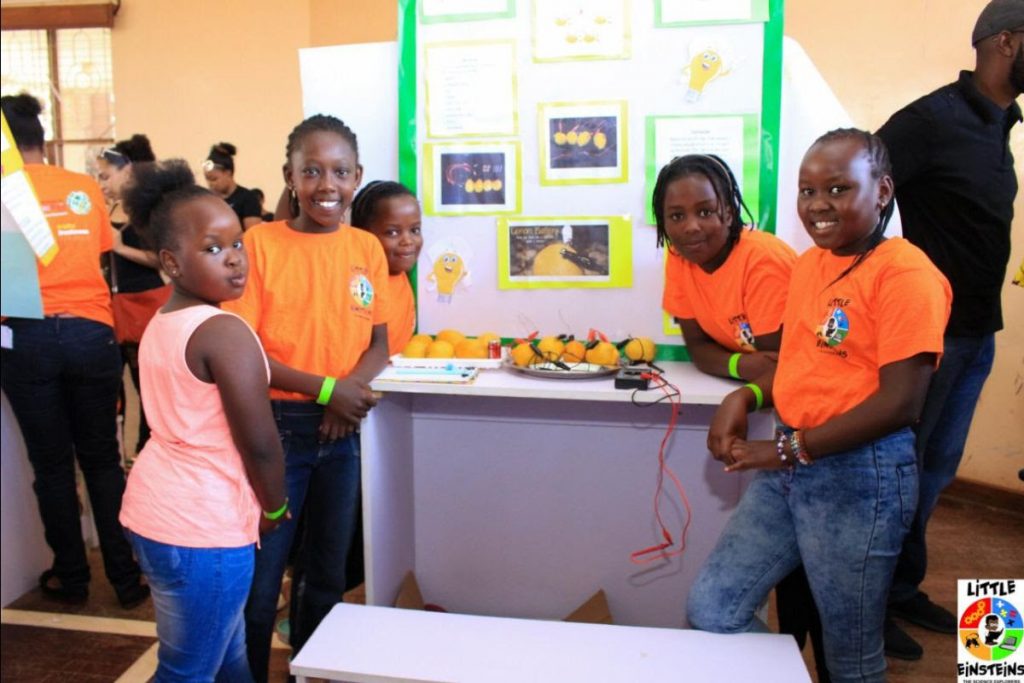
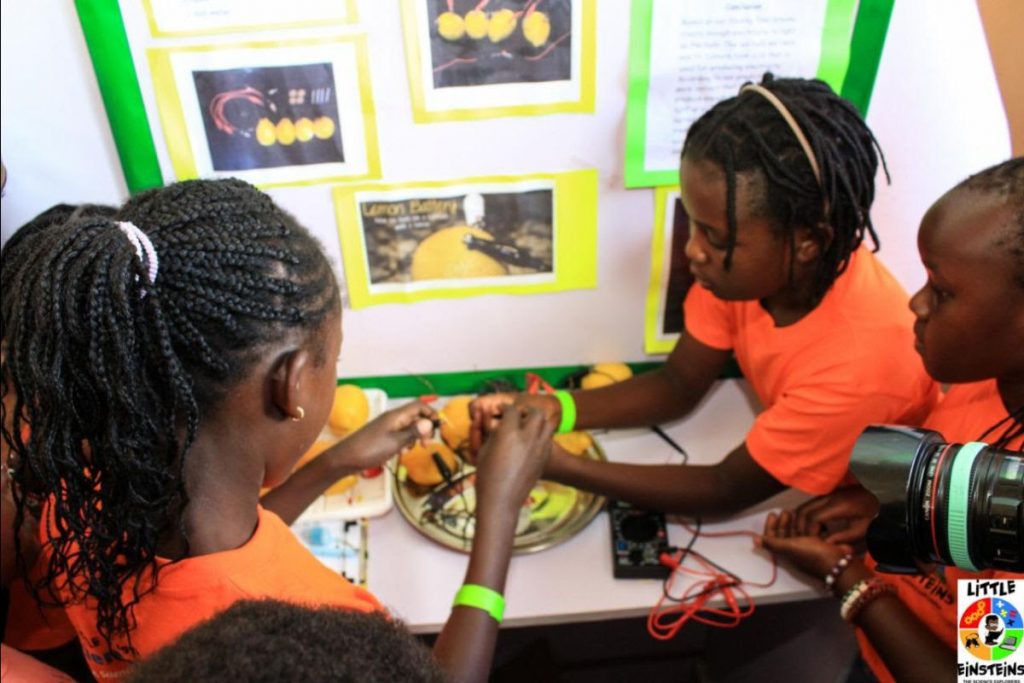
Some of our Grade Four students recently participated in the annual Little Einstein Science Fair at Aga Khan High School. The little Novaneers wowed the crowd and scooped the first prize in “Clarity of Expression” for their innovative project dubbed “The Lemon Battery”. 


The students who represented Nova Pioneer at the fair were Naima, Waihiga, Ryan, Mac, Nissi, Justin and Makena.

Inspiring the next Generation of science explorers

Little Einsteins East Africa believes that Science Exploration in young children begins with Fun, and sets the basis for a lifelong interest and knowledge of Science, Technology, Engineering and Mathematics (STEM) Learning. The intention of their Science Fair is to showcase the innovation of children in STEM. The children showcasing their projects are between the ages of 3 and 12 years old.


STEAM at Nova Pioneer

Our Novaneers continue to amaze us with how much they can learn and accomplish in and out of the classroom. Nova Pioneer introduced STEAM-based learning programmes in an effort to equip students with the skills and knowledge needed to thrive in the 21st century. STEAM learning will not only produce tomorrow’s designers and engineers; it will develop innovative mindsets and the ability to problem-solve, ensuring that our students become creators of technology, not just passive consumers. 


Taking science beyond the classroom

We are proud to be part of developing the next generation of science explorers. Nova Pioneer teachers encourage students to participate in extracurricular science activities such as the Little Einstein Science Fair as a way for them to further develop science content knowledge and process skills.

Future Philanthropist nominated for Ashoka

At the beginning of Term 2, Jeanne Sere, our Form 3 student and a philanthropist in the making, was nominated to be part of the Ashoka Globalizer event. She was invited to share her journey of change-making on stage and the hosts were honored to have her.    Purpose projects

At the beginning of Term 2, Jeanne Sere, our Form 3 student and a philanthropist in the making, was nominated to be part of the Ashoka Globalizer event. She was invited to share her journey of change-making on stage and the hosts were honored to have her. 


Purpose projects

Secondary School students are encourage to find real life purpose projects that they want to get involved in. We believe that students who show a sense of purpose have a deeply developed intrinsic motivation to achieve a goal or take part in an activity. This means they are not motivated to achieve something simply because they can, because it is hard, or because they get rewarded or recognized for it. Rather, they do it because they have a deep internal interest in pursuing it—and derive pleasure from the process.

Above: Jeanne Sere at the Ashoka Globalizer event earlier this year.


Re-use and recycle

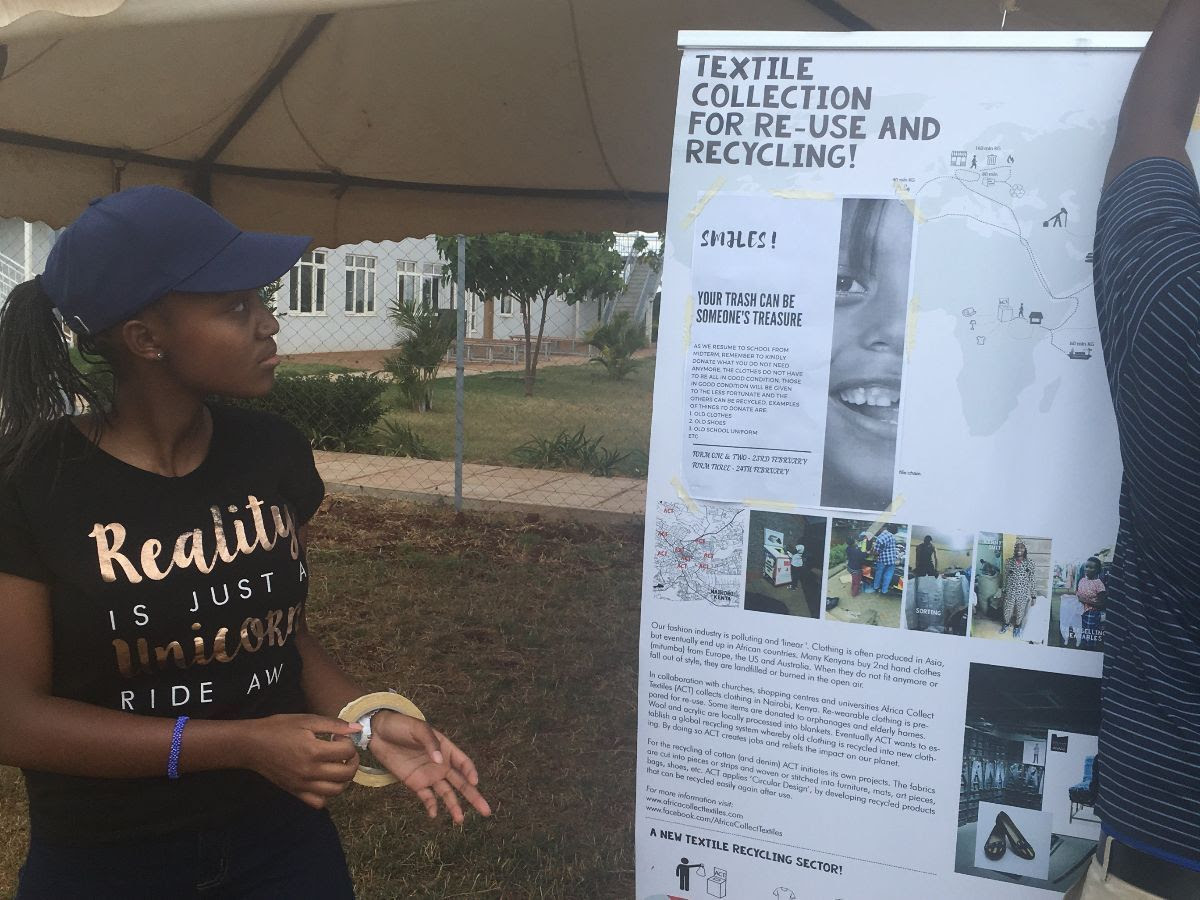
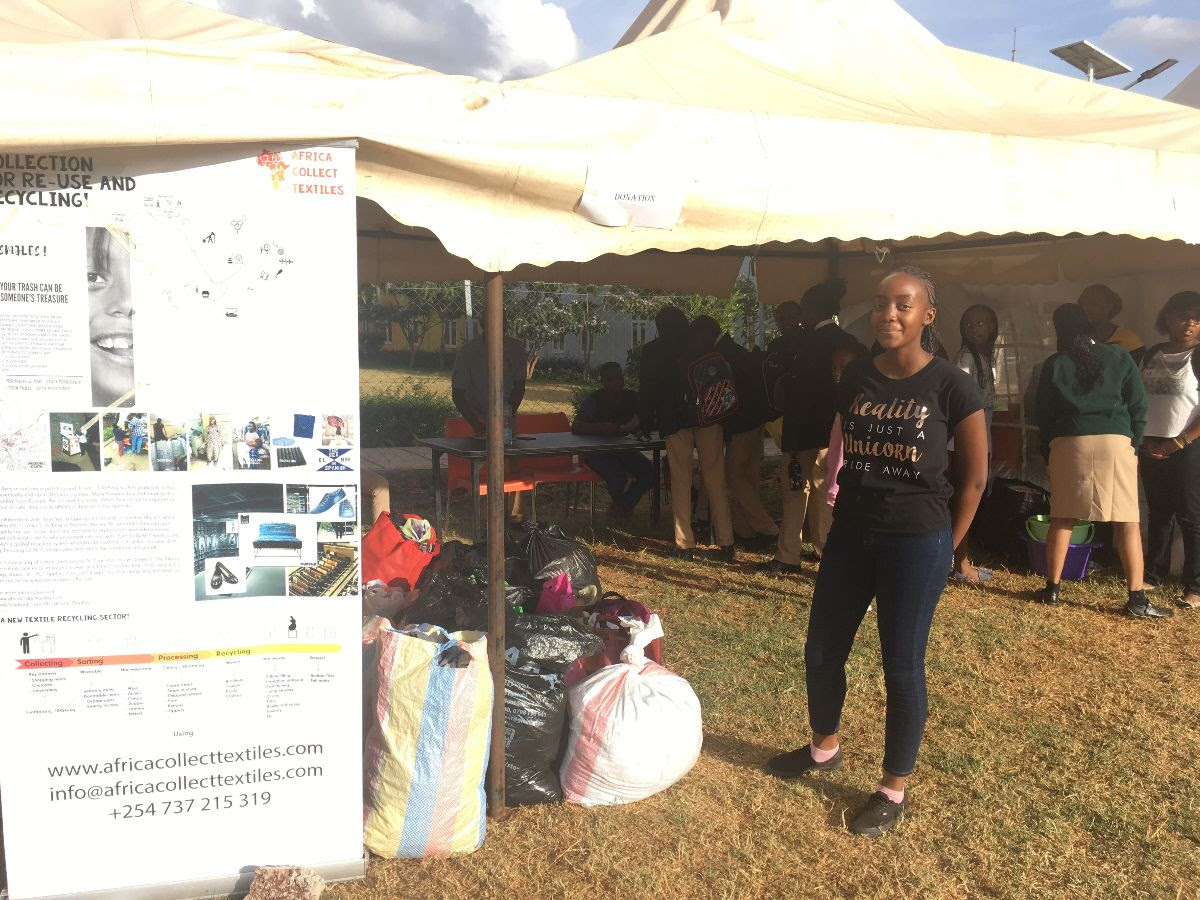
Jeanne noticed an opportunity in reusing and recycling clothes. Through identifying this need, she began collecting old uniforms and clothes from her peers and converting them into other garments or simply donating them to the needy. Earlier this term, she collected a total of 600 kilograms of clothes and shoes. 


A valuable investment

In April, her project, SMILES received a Ksh 20,000 award from Africa Collect Textiles for her stellar achievements. “We as Africa Collect Textiles are happy to be a part of Jeanne’s launch of textile collection at Nova Pioneer High School. This launch resulted in a gain of approximately 600 kilograms of Textiles and Footwear ” – Africa Collect Textiles. We congratulate and stand by Jeanne as she continues to further this project to greater heights.