Nduta Gicheru Shares Her Top 5 Tips For Academic Excellence.

Academic Excellence is important because it is strongly linked to the positive outcomes we value at Nova Pioneer.During the Alumni Virtual connect event here ,Nduta Gicheru from the Alumni class of 2020, shared her top  5 tips which she used while in school for academic excellence Nduta Gicheru scored an

Academic Excellence is important because it is strongly linked to the positive outcomes we value at Nova Pioneer.During the Alumni Virtual connect event here ,Nduta Gicheru from the Alumni class of 2020, shared her top  5 tips which she used while in school for academic excellence

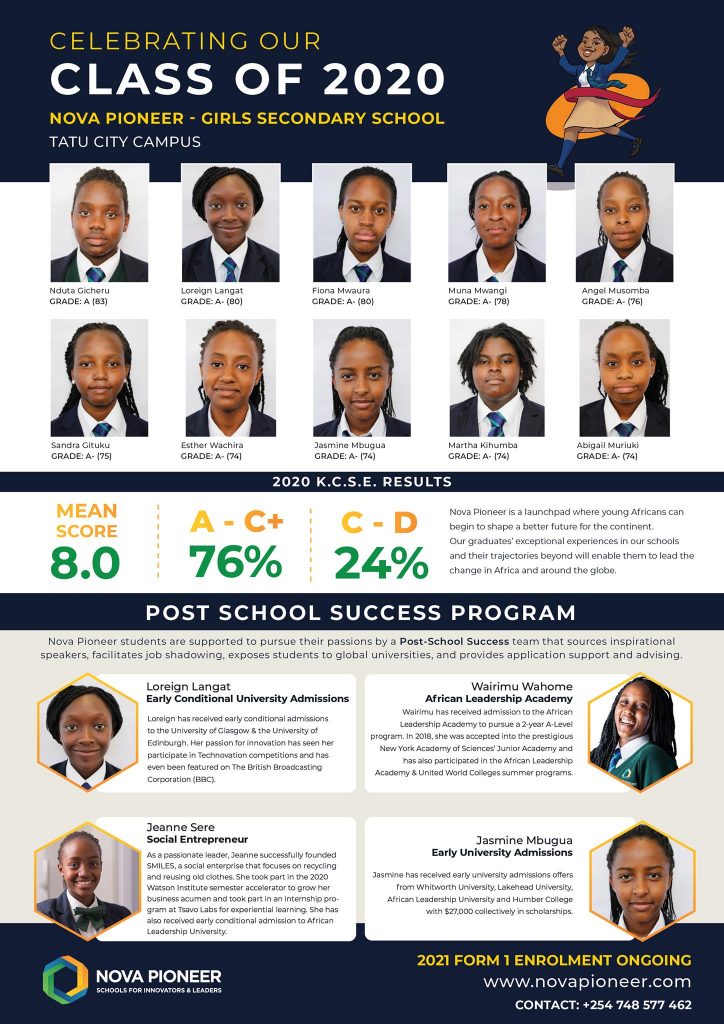
Nduta Gicheru scored an A of 83 points. In addition to her exemplary performance in the KCSE Class of 2020,  Nduta was the Team Captain of the swimming club, The inaugural school president, and was also part of the music club where she played Piano.

She was very keen on mentioning the importance of being an all rounded student, which she indeed led by example.

Here are her top 5 tips;

 Start the race as soon as they say go.

This journey is not going to be about who the fastest runner is or who has the most talent. It’s about who is the most adaptable and keeps a steady pace. Like a race, as soon as you get on campus keep a moderate but constant exertion in your academics and outside classroom activities. As long as you start now, you will be closer to your goals than you were yesterday. Adopt self mastery sooner rather than later. 

Build a community.

 Find friends who are a few steps ahead of you and will keep you going forward daily. Healthy competition makes all the difference. It creates accountability as well as support during the trying times. 

Set out to fail. 

The greatest lessons come from the biggest mistakes. The ones that stick with us forever. Put your arm up each and every time to answer a question, what’s the worst that can happen if you get it wrong? So what if they judge you? They certainly will not be laughing when you learn something new and eventually achieve your goals. Remember winning and losing are just trajectories in the journey which are dependent on only you. 

Go, go, go the extra mile. 

They wake up at 5:30, you wake up at 5:00. It’s half an hour more in one day but three and a half hours in a week. And so much more in a year. Make the sacrifices early. The journey will become easier. In the end it will be a cruise. Additionally, go the extra mile in applying for all the opportunities that you are interested in. They will come and go, don’t agree to let them pass you by. Aim to be a holistic individual. 

 Lastly, serve in whatever capacity you can. Find a place to be of service to others. It will help you build relationships, learn to work with people and to respect the people around you. From big positions like School President to smaller positions like Class Environment lead. Lose yourself in service to others. 

Now, if you do not remember any of these things just remember that you have what it takes to be a success. The first thing you must do is believe it. 

To catch the full video on the event, click below;


How To Identify Whether Your Child Suffers From Anxiety

Anxiety is a normal response to dealing with COVID-19, especially amongst children. Parents need to pay extra attention in order to identify if their child suffers from anxiety, this will help in responding sooner rather than later.   Some signs of anxiety are evident. Simply being aware of signs of

Anxiety is a normal response to dealing with COVID-19, especially amongst children. Parents need to pay extra attention in order to identify if their child suffers from anxiety, this will help in responding sooner rather than later.


Some signs of anxiety are evident.

Simply being aware of signs of anxiety can help the condition to be managed. Early signs can be different in all children. We advise parents to observe their children to see if their child/ren battle to complete simple daily tasks or if they may be disengaged in hobbies that they previously enjoyed. Another sign includes trouble sleeping, which ultimately impacts a child’s energy levels and appetite. Other signs may include nail-biting, being restless, exhibiting signs of a short temper and continuous worrying.


Demonstration of anxiety

Signs of anxiety can be demonstrated in various ways depending on a child’s age. Younger children who struggle to express their feelings may have an outburst or demonstrate aggressive behavior, making it difficult for a parent to understand what the problem might be.

With teenagers and older children, they may appear irritable and choose to be alone when they begin to feel anxious. It is important for parents to communicate all of these signs to their children and to provide their children with ways of trying to manage their feelings and actions accordingly.


How to manage the anxiety?

Teaching coping skills to manage anxiety is helpful to children. The most effective way to manage anxiety is to use physical strategies such as breathing deeply, counting backward from 100, finding a safe area in the house to unwind, giving the child their favorite or comfort toy is also helpful in getting them to be calm and relaxed. Certain physical activities such as painting art or reading books, or playing a game can help children lower their anxiety and give parents an opportunity to talk to them about how they feel.

Parents need to make children aware from an early age that it is important to focus on what they can control instead of what they cannot control. Make your children aware that they should focus on what they can do now to help them deal with their anxiety. With regards to anxiety directly related to the Covid-19 pandemic, go over social distancing rules on hand sanitization and the use of personal protective equipment such as face masks. These conversations can help children feel more comfortable about being in public spaces knowing that they are safe.

Lastly, make an effort to ask your child what they are thinking about and discuss whether it is based on fact or fiction. If your child has fictional thoughts that they have created in their mind, you and your child can talk about it to find ways to change the focus to what is actually happening now in reality and encouraging them to have positive thoughts and a positive outlook on life. 

However, professional help should be sought if it starts to affect your child’s ability to think and function in their daily lives at home, at school, and in their social environment. 

Source: Children’s Health; Kids Helpline

Tree Planting At Tatu Primary

“I’m planting a tree to teach me to make the world a better place.”- Andrea Koehle Jones  I believe this was Grade 3’s motto for the day as they embarked on a journey to make a difference in the school’s community. On Friday 11th June 2021, the learners at Tatu

“I’m planting a tree to teach me to make the world a better place.”-

Andrea Koehle Jones 

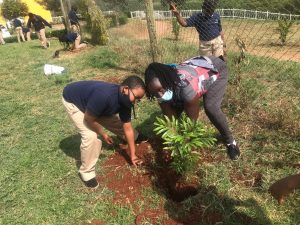
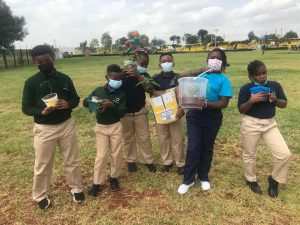
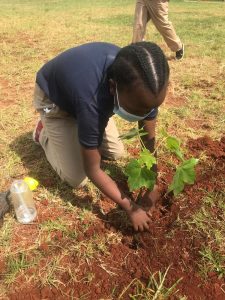
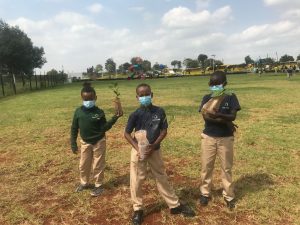
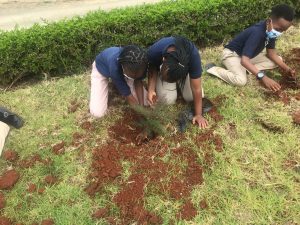
I believe this was Grade 3’s motto for the day as they embarked on a journey to make a difference in the school’s community. On Friday 11th June 2021, the learners at Tatu Primary planted a total of 100 trees in our school that would not only benefit the environment but also for educational purposes such as improving the children’s learning. 

This exercise was supported by their homeroom teachers who educated the learners on the importance of tree planting and did a demo beforehand in class to illustrate how trees are planted. The best way to cultivate the cultural principle of the joy of learning is by inspiring a love for nature at an early age. 

Planting trees helps beautify the environment. As the trees begin to grow, they will attract bees, birds, and butterflies. Personally, it comforts my soul to see birds, bees, and butterflies flit among the trees and flowers. I imagine by the time Grade 3 learners transition from Nova Primary to Nova High School, it will be a sigh of relief and a sense of pride that they have been able to contribute to the environment and their learning. 

Tree Planting in Session

This was one of the best lessons since the learners were able to do it practically. The Grade 3 learners were happy about planting trees, making a difference in the environment, and nurturing a love for nature. Watching them dance, water their newly planted trees, and naming their trees was a delight beyond measure. The school community will be surrounded by greenery singing birds and blooming flowers in the days and years to come.

It is our hope and joy that they will grow eventually into strong healthy trees. 


How Ready is Your Child for School?

The first five years of your child’s life is critical, as this is the period in which early childhood development takes off. Parents can find it difficult to decide on when the best time is to send their child to school. No one wants to send their child to school

The first five years of your child’s life is critical, as this is the period in which early childhood development takes off. Parents can find it difficult to decide on when the best time is to send their child to school. No one wants to send their child to school prematurely, neither do they want to send them to school too late.

One of the things parents need to know about school readiness is that it involves two types of indicators: an eagerness to learn and an enthusiasm for school. School readiness is thus a measure of how prepared your child is to succeed at school. Check out these 5 key indicators of school readiness to look out for in your child:

1.Physical and Motor Development:

If your child is able to crawl or walk, it means that they are getting ready to explore their physical environment. Parents can look out for gross motor development, which includes running, skipping and standing on one leg. Furthermore, parents can look out for fine motor development in their child. When your child is comfortable using a pair of scissors, successfully able to use zips and buttons and they are able to use cutlery, this is an indicator of school readiness. Moreover, visual as well as auditory development and your child’s ability to take care of themselves by being able to go to the toilet alone, is another strong indicator of school readiness.

2.Emotional and Social Development:

A child who is emotionally well-adjusted has a significantly greater chance of early school success. Your child is most likely ready for school when they get along with their peers. They are ready for school when they can interact within a group, they show an interest in other children and they willing help others. Also, if your child can express feelings and needs, can sit still long enough to listen to a story and can concentrate on a task for a reasonable amount of time, they are most likely ready to be placed in a school.

3.Cognitive Development:

Every parent knows that mental ability is essential in the cognitive development of a child. How a child thinks, makes independent decisions and figures things out for themselves is a good indicator of school readiness. It is the ability to take direction and following instructions that helps children navigate the world around them and that also encourages an interest to learning.

4.Language Development:

A child is ready for school when they can express themselves through speaking and vocabulary as well as literacy and listening. Furthermore, they should be able to communicate effectively in their home language, be able to sequence or recite a story or a set of events comprehensibly, and identify similarities and differences between objects.

5.Emotional Development:

Last but not least, your child is most likely ready for school when they show emotional maturity. When your child can reasonably control their emotions and handle separation well, that means they can handle being in a school setting with other children. Other emotional development indicators include confidence, independence and displays of being responsible.

Sources:

https://helpmegrowmn.org/HMG/HelpfulRes/Articles/WhatMotorPhysicalDev/index.html#:~:text=Motor%20development%20means%20the%20physical,and%20touch%20his%2Fher%20surroundings.&text=Motor%20development%20is%20important%20throughout,tied%20to%20other%20development%20areas

Celebrating Day of the African child at Nova Pioneer Athi Primary.

June 16th is a day set aside to remember and celebrate the African Child. Every year on this date, the African Union and its Member States observe the Day of the African Child (DAC) as a commemoration of the 16th June 1976 student uprising in Soweto, South Africa, where students

June 16th is a day set aside to remember and celebrate the African Child. Every year on this date, the African Union and its Member States observe the Day of the African Child (DAC) as a commemoration of the 16th June 1976 student uprising in Soweto, South Africa, where students who marched in protest against apartheid-inspired education, were brutally murdered. 

People worldwide celebrate this day by highlighting awareness about the education system in Africa by sharing their views via social media using some hashtags for example #educationforAfrica, #InternationalDayOfTheAfricanChild. Contributions are also made to organizations that work towards improving education for the African child. 

This year, a deep emphasis was put to raise awareness on having Access to a child-friendly Justice and education System in Africa. This augers very well with the Nova Pioneer Mission of developing generations of innovators and leaders who will shape the African Century. It was therefore our pleasure to have our students join the rest of the world to celebrate this day. 

HOW WE MARKED THE DAY AT OUR ATHI RIVER CAMPUS

Reading is an important skill in every child’s life. Book reading can spark a child’s imagination and stimulate curiosity, help develop the child’s brain, ability to focus, concentration, social skills and communication skills it also helps a child learn the difference between ‘real’ and ‘make-believe.

To underscore the importance of the reading skill among our students and parents at NPAP, what better way was there to celebrate The day of the African Child than to participate in STORY MOJA PUBLISHERS READ ALOUD PROGRAMME. In this, our students joined children from all over Kenya to break the world record in reading.

The aim was to have every child in Kenya read the same text at the same time from their own school. To make this more interesting, our P.T.A class representatives read with the students instead of having the teachers do it. The parents representatives then led the students in asking and answering some questions from the text read. The data was then forwarded to the publisher awaiting tallying to see whether the world reading record is coming to Kenya, we are anxiously awaiting the results! 

Our day in school at NPAP rarely ends without a “Joy of Learning Moment ” and this day was not going to be any different. Our students engaged in  various activities depicting African art work – Face painting, making head crowns decorated with feathers, some bead work and making of African dancing costumes. 


Youth Hold the Promise and Power to Shape the African Century

Today (June 16) South Africa pauses to recognise Youth Day.  Across Africa, it is the International Day of the African Child.  Both of these acknowledge the initiative, sacrifice and leadership of South Africa’s youth of 1976, who rose with courage to the foremost challenge of their time in resisting apartheid;

Today (June 16) South Africa pauses to recognise Youth Day.  Across Africa, it is the International Day of the African Child.  Both of these acknowledge the initiative, sacrifice and leadership of South Africa’s youth of 1976, who rose with courage to the foremost challenge of their time in resisting apartheid; in resisting a system of education designed to subjugate them.  

In commemorating the youth of 1976 today, we should also ask what the foremost challenge of today’s youth may be?  What initiative, courage and leadership does it ask of them?  And how do schools today need to be different to be arenas in which young Africans can develop the capacity and conviction to meet the present, and shape the future?


This can be the African Century

Our mission at Nova Pioneer is to develop generations of innovators and leaders who will shape the African Century.  That mission is grounded upon the realisation that the future will be African, and on the conviction that the potential of that future lies within the boundless human potential of young Africans.  


Numerically, the future will be African. 

Just one decade from now, in 2030, there will be more young people entering the workforce across Africa than the rest of the world combined.   By 2100, Africans will represent between 30-50% of the world’s population, compared to just 17% today.  That population growth represents the foremost challenge — and opportunity — ahead for our youth and continent, and one of the top realities that will shape the world over the next 100 years.  


Africa’s pace of change

In addition to those numbers, Africa’s youth face a future with the same rapid and accelerating pace of change in technology, global interaction and culture, climate, and wealth as is faced by young people the world over.  Some of these will be positive (more productive technologies, better healthcare), some negative (climate change, infectious diseases), some could be both (artificial intelligence) — but all at a rate that will be both dizzying and exhilarating.  


Empowering youth to meet the challenges and seize the opportunities

On the one hand, the African Century could be one of great promise: a rising of Africa’s talent, culture and prominence, contributing to a richer and more equitable world.  On the other, it could betray that promise, with expanding inequality, conflict and suffering.  

The key to what happens, of course, is what we do about Africa’s human capacity — and about youth development in particular.  There are no shortages on this continent of opportunities to do good and do well; of problems to solve, contributions to make, innovations to create or institutions to strengthen.  From the figures above, there is no shortage of innate talent to do that good work.  The question is how we equip that talent to meet the challenges and seize the opportunities?


Africa’s education system can be the answer

Africa’s education mission has to be pursued on two fronts at the same time. First by providing all children with access to basic education which in turn gives access to basic opportunities. Secondly by equipping more youth with the kind of skills that they will need to shape the future.


Mission I: Provide Basic Education

We need to significantly and rapidly improve the foundational ability of all children to read, write and calculate skillfully.  These are the keys to accessing basic opportunities in life and without these, a child never leaves the starting blocks.  While we have made tremendous progress on getting children into primary schools across Africa, too few of our children are actually developing reasonable competence to read, write or calculate.  This is an imperative and opportunity for both governments and private social innovators alike.  


Mission II: Skills to Shape the Future

We also need to significantly expand access to education that equips young people with the skills, self-confidence, character, and social capital to shape the future.  While the first imperative of broadening access to basic education is one shared by everyone in global education, it is on this second imperative that we at Nova Pioneer are particularly focused.  


Once more, however, the question is ‘how?’  


Encourage a culture of voice, enquiry and collaboration

If our schools are to be arenas of empowerment and invention — in stark contrast to their roles in Soweto of 1976 — then we need to shift our cultures and our teaching to encourage student voice and build skills of collaboration.  

Firstly, that means a shift in how we learn and teach.  From time spent lecturing to time spent posing and provoking questions.  From teacher talk time to more student talk and think time.  From respond-and-reply, to building students’ skills to form hypotheses, articulate and substantiate a view, and passionately yet collaboratively debate, dissent and deliberate on ideas. 

Secondly, it means a shift in relationships.  From a culture of silent obedience to a culture of respectful engagement.  Silent obedience erupts in moments of resistance and recrimination — as we have seen repeatedly across our sector.  Respectful engagement may unearth similar issues, but with more mutual capacity to forge solutions by which we can all live and in which we share a sense of authorship.    

This requires new skills and strategies, and courage as educators and parents.  Many of us adults have grown up in clearly hierarchical cultures, or with norms of quiet obedience to our elders or leaders.  Indeed, respect for elders is a valued norm across much of Africa — and certainly is deeply ingrained in my own upbringing as an Igbo boy.  But relationships that have shared voice and mutual respect across age and hierarchy is needed if we are to equip our children to engage the world ahead with confidence and skill.  


Globally competitive standards

If our youth are to shape the African Century to be a century of flourishing, alongside their peers from around the world, then they need to achieve levels of academic growth and skill development that equips them to collaborate as peers and leaders globally.    

Indeed, the single most important cultural norm a school can set is probably holding high expectations.  In all sorts of contexts of resources and external culture, show me a school with strong outcomes and I’ll wager it is a school that sets high expectations and demonstrates its belief that students can meet them.  By stretching to meet high expectations young people gain the single most important lesson that they can from school: that they are fundamentally capable of learning, growing and achieving.  


Servant Leadership has the power to transform Africa

In recent years I have had the privilege of leading a session of our secondary schools’ leadership course.  In it, we frame up two notions of what it means to be a leader: the first is a leader who expects the servitude of those that she or he leads — “the boss” we label it.  The alternative is a leader who expects to serve and make better the lives of those she or he leads — “the servant leader” we label it.  Africa has no shortage of formal leaders.  However, our experience and examples of leadership have far too often been that of ‘the boss’, and that has betrayed so much of our possibility.

If our youth are to shape an African Century of flourishing — of greater prosperity and equity — then they will need to develop into a generation of servant leaders.  Sadly, there may simply not be enough visible examples of this today to argue convincingly that it is in practice viable.  We need to make examples of servant leadership more visible, and our youth will need to prove its viability with their example of their own lives.  For that to happen, we have to start early to cultivate an ethic and habit of servant leadership.  It will not develop on its own later.  School is where we start.  


Our Youth Hold the Promise and Power to Shape the African Century

As today we look back with appreciation on the youth of 1976, let us also look forward with commitment to the youth of 2021.  We stand once again at a frontier with an uncertain future, reliant as we always have been on our children to shape it.  They hold within them the promise and power to shape the African Century.  The development of their character, capabilities and social connection — heavily through our schools — will determine what kind of century awaits.
School From Our Students’ Perspectives

Nova Pioneer students from our Tatu City Girls Campus Wangari and Shirleen, recently made an awesome video showcasing their High School experience. We caught up with the two ladies to find out more about their experience making the video.   What excited you about doing a video project like this? 

Nova Pioneer students from our Tatu City Girls Campus Wangari and Shirleen, recently made an awesome video showcasing their High School experience. We caught up with the two ladies to find out more about their experience making the video.


What excited you about doing a video project like this? 

We have always had a passion for film so working with the film equipment and doing a project like this made as feel like “real” directors.


What inspired you to do it?

We wanted to make something different, something that’s not just about academics or the world- class facilities of the school. We wanted to showcase the moments we share in school with the other girls. We wanted to show how we enjoy every single second of High School.


Were there any challenges you faced when putting it together? If so, how did you overcome them?

Firstly, finding a camera of good quality was the first step. Once we did, we experienced a few glitches in how to use it. Secondly, some of the students involved were camera shy and we had to make them comfortable. It was our first time editing so getting the music transition right was an issue but we managed to get the the hang of it.

One of the greatest advantage was having a partner. This way we motivated each other going by our culture principle of  ‘Greater Together’. We collaborated by dividing the work and tasks, and this made filming faster.

We learnt how to edit from YouTube, although it included a lot of frustration and sleepless nights because we had set a deadline for ourselves. We would do it all over again though.


Give us a fun fact or two about yourself.

Fun- ish facts about us:

I (Wangari) always make really good food, the trick is to add honey or soy sauce if it doesn’t taste good. Try it sometime…hahaha.

I (Shirleen) acted in my first play when I was only 8 years old.


In The End

Being able to make something that tells a beautiful story and immortalizes a good memory or experience is always fulfilling. Wangari and Shirleen have embodied the spirit of ‘Greater Together,’ and in the process have set High Expectations for themselves and others. We definitely look forward to more stories they will tell from their high school experience and even beyond!


Nova Pioneer Graduates Ready to Take Over the World

Our Nova Pioneer Schools in Kenya recently celebrated the Class of 2020 for the exemplary results achieved on their KCSE exams and we do not doubt that the students are ready to take over the world.    From Surviving to Thriving In 2020, education across the world was abruptly derailed

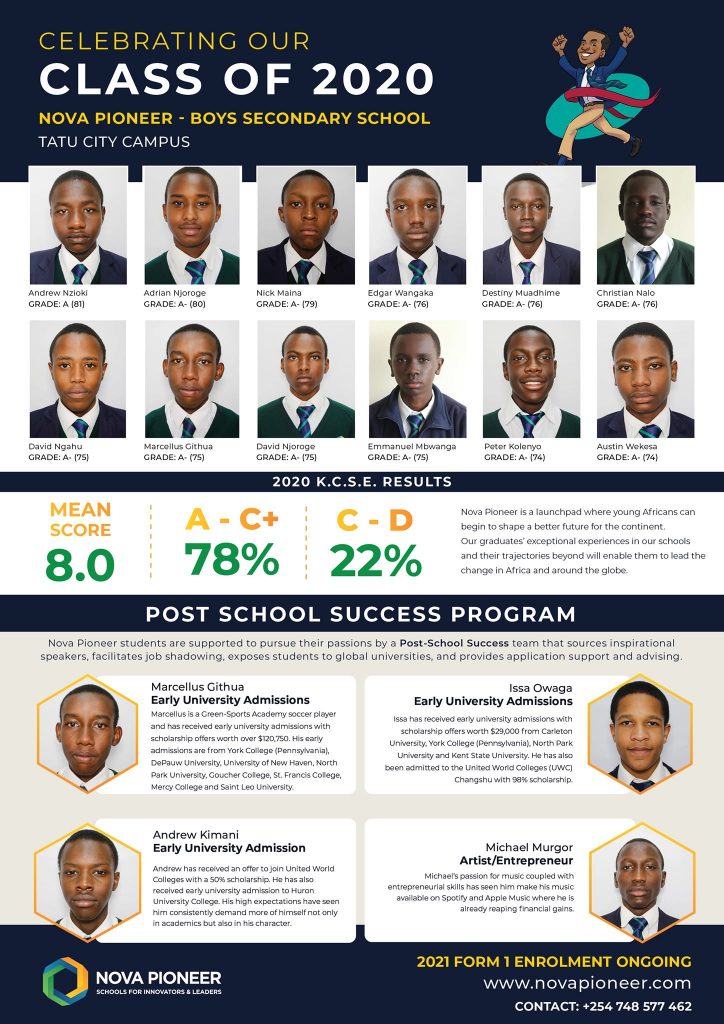
Our Nova Pioneer Schools in Kenya recently celebrated the Class of 2020 for the exemplary results achieved on their KCSE exams and we do not doubt that the students are ready to take over the world. 


From Surviving to Thriving

In 2020, education across the world was abruptly derailed by COVID-19 at every level. In many countries, schools struggled to address the safety of children while also helping them continue to learn and grow. Without a doubt, Nova Pioneer secondary students, in particular,  demonstrated a high level of commitment during the last year, despite the unprecedented disruption and uncertainty presented by the challenges brought about by the pandemic.

The Nova Pioneer Class of 2020 overcame many challenges to post good results and rose above the challenges that came their way. We are encouraged by their performance.

We are extremely grateful to the teaching and support teams who have drawn on their extensive teaching and coaching experience to support all students through this immensely difficult time. The resilience shown by our Nova Pioneer Tatu Boys and Girls Secondary teachers and students is a true demonstration of how we live out our culture principles of High Expectations and Always Growing.


Meeting and Exceeding High Expectations

The Nova Pioneer graduates of both the Boys and Girls schools achieved remarkable success.  Our 231 graduates achieved a mean grade of 8.02 (a B-), with both schools achieving that B- average.  77% of the Class of 2020 earned a C+ or higher.  In addition, the Class of 2020 included our first two ‘A plain’ average achievers (one per school), a feat accomplished by less than 0.2% of candidates nationally. 

A particular shout out goes to the women of Tatu Girls Secondary Class of 2020 for setting a strong standard as the school’s founding and graduating class.


Ready to Take Over


Where to from here?

Our Post School Success team will continue to engage with the Class of 2020 to ensure that every Nova Pioneer student will be ready to pursue their passion through the best post school fit and are ready to take over in their industry of choice.  Already, across the Tatu Boys and Tatu Girls graduating classes of 2020, 

  • 7 students  have applied to the African Leadership University, and all have been offered a preliminary admission, pending submission of their KCSE results. 
  • 97 students have been admitted to Strathmore University. 
  • 2 students have been admitted to York University in Toronto, Canada one of them receiving a CAD 40,000 in scholarship from the faculty of liberal arts.
  • One student has been admitted to 3 colleges in the US, with scholarships, and will join Clark University where she received an annual $16,000 scholarship.
  • Two students have  applied to UWC (United World Colleges) and been admitted with scholarships.
  • One student has  applied to the African Leadership Academy and has been accepted with a $5,000 scholarship. 
  • 13 students have participated in the Concourse Global clearing process. 10 students have collectively received a total of 46 admission offers with $272,650 in scholarships.


This Is Not the End Of The Journey

Too many schools see their job as developing “smart kids” and focus narrowly on building a student’s knowledge base and academic skills. While that is critically important, Nova Pioneer holds itself accountable to a more holistic “Vision of a Novaneer”: we want to deeply develop our students’ character, capabilities and connection.  We define our success based on a larger set of longer-term goals; we expect our students to excel in exams and attend great universities, build innovations and art, launch new companies, and impact their communities. Ultimately, we want our students to become shapers of a world they envision rather than takers of the world they inherit. 


The Future Is In Good Hands

Today, we are again reminded that the mission and vision set out together to achieve as Novaneers, will be felt throughout Africa, and indeed the world, through the impact that our alumni will have as they shape their future around their vision and get ready to take over the world.  We are very proud of all our students and wish them well as they transition into the next stage of their lives.

Alumni Reflect on Nova Pioneer Experience and Impact Post School

Our Nova Pioneer admissions team hosted an online connect session with past graduates. The event was an opportunity for the Alumni to meet the High School’s incoming Form 1 class of 2021 and to reflect on their Nova Pioneer experience. Nova Pioneer was founded to be a launchpad where ambitious

Our Nova Pioneer admissions team hosted an online connect session with past graduates. The event was an opportunity for the Alumni to meet the High School’s incoming Form 1 class of 2021 and to reflect on their Nova Pioneer experience.

Nova Pioneer was founded to be a launchpad where ambitious young Africans can begin to shape a better future for the continent and the world. Nova Pioneer’s method of teaching and learning is aimed at preparing our students for and equipping them with the right skills and knowledge a post-school environment full of uncertainty and challenges.

Looking on the success of Nova Pioneer’s alumni as they continue to prove to us each passing year through their progress there is a feeling of immense pride amongst the team.

The incoming students were curious to learn from the alumni students on different subject matters ranging from boarding life to their learning experience and here are some of the main questions they raised during the session.


What are some of the things that you’re happy Nova Pioneer taught you that have now prepared you for life after school?

Wire Onyango(Class of 2020)

I am happy with how Nova Pioneer gave me a platform to develop my inner and outer voice. Being a student at Nova Pioneer helped me to develop my social skills as I am now able to easily express myself and I can interact with various people from different backgrounds with ease. More so, being a Novaneer has taught me how to manage my emotions better when interacting with different people from different backgrounds. I now interact more freely with others and it has made communication and expressing myself easier post-school. While at Nova Pioneer, I got an opportunity to  Intern with the Marketing & Admissions team that further helped me to work on my social skills.


What do you miss about Nova Pioneer?

Fatma Bonaya(Class of 2020)

I miss the togetherness, the effect of the cultural principles, the serene environment, and the feeling of happiness and independence. Nova Pioneer felt like home. We all want to be at a place where you feel warm and safe just like at home.


In hindsight, do you have anything that you would have done differently or more of while at Nova Pioneer? 

Raphael Kathambana(Class of 2020)

Nova is a mix of learning, fun, community, and exploration and it was always a joy to be busy in the many activities that we had at our disposal. Personally, I wish I would have pursued more of the opportunities that the school offers endlessly.


How did Nova Pioneer Prepare You For University? 

Andrew Jones (Class of 2019)

The day after graduation is a mark of growth and completion of milestones and a station for assigning bigger and tougher steps. 4 years is a lot to celebrate but what becomes of life after it? Having made my crossover in 2019, as a form 4 leaver, it becomes a stage of self-reflection and exploration of short and long-term decisions. 

The intensity of choices such as career paths, responsibilities, and basic life skills gets to its peak. Outside Nova Pioneer walls lies a different world where practical independence is key. The most anticipated post-school feature is University. With a variety of courses available for exploring, you are subjected to choose a line of study to satisfy your interests for the next four years and life after that. As compelling as that may be, factors such as passion, talents, jobs, and income sources come into consideration and it’s best if you analyze all factors before committing to a specific course.

 Outside academics, it’s the point of modeling an independent character and understanding that the influence of parents tends to loosen up. To make the transition, it’s best for both the parents and kids to take the risk of investing in an activity your son or daughter might be passionate about. I consider this as one of the best methods of self-discovery: taking the risk of exploring and failing forward by learning from it. However, if you find something of interest and get fortunate enough to reap some benefits from it, then that becomes a great achievement for both parties. 

All in all, there’s a large gap period between high school and university, take time to navigate different pathways until you get one where you envision will make you happy.


When you’re caught up in a negative mindset, what are some of the things that you tell yourself or things you do to get yourself out of that space?

Jeanne Sere(Class of 2020)

The first thing I used to do was talk to my closest friends because that would help me get some of the negativity out of my mind as a result of sharing how I felt about things. This really helped because I’d get encouragement from them and you realize that you can’t do things alone as the old saying goes that, “no man is an island.” You certainly need support from the community around you to help you rise above the challenges you face.

 I also used to refer back to the Bible which always used to play a vital role in encouraging me to push on even when faced with challenges and to eventually avoid being in negative mind space.


To hear more from our alumni students, feel free to click on the video below;


Should you have any Admissions related inquiries, please reach out to us via admissions.ke@novapioneer.com. We look forward to hearing from you.


How Can Schools Help End the Stigma Around Menstrual Hygiene

Imagine a world where no girl or woman is held back because she menstruates.” This is the 2030 vision set by WASH United, a German non-profit organisation and the global coordinator of Menstrual Hygiene Day. Every year on May 28, nonprofits, government agencies, the private sector, the media, and individuals

Imagine a world where no girl or woman is held back because she menstruates.” This is the 2030 vision set by WASH United, a German non-profit organisation and the global coordinator of Menstrual Hygiene Day.

Every year on May 28, nonprofits, government agencies, the private sector, the media, and individuals come together to celebrate Menstrual Hygiene Day (MH Day) and advocate for the importance of good menstrual hygiene management (MHM). 

Over 800 million women and girls menstruate every day and yet, across the globe, ‘period poverty’ and stigma has been identified as a top reason for girls missing school. UNICEF has estimated that roughly 1 in 10 girls in Africa miss school because of their periods each year. Without access to proper education and resources, girls are often forced to stay home from school when menstruating. 

General practitioner, Dr Sihle Asiedu-Darkwah, strongly believes that schools, teachers, and parents can help lead the charge in ending the stigma around menstruation and support young girls as they go through this natural stage in their lives.

We caught up with Dr Sihle Asiedu-Darkwah to find out more about Menstrual Hygiene and also find out more about the role that she thinks schools and parents should play.


What are some of the issues girls and women face today with regards to menstrual hygiene?

Many females are not able to access appropriate sanitary products. This results in them using unsuitable substitutes or not leaving home at all during the menstrual period. This means that they miss out on school, work and other activities due to not being able to access sanitary products that can assist them to continue as usual during the menstrual period.

This further perpetuates the cycle of poverty – as more females do not finish school or sustain employment due to absenteeism.
Many females may not have knowledge or access to different types of sanitary products that can be more conducive to their lifestyle.

There may be females who are active/athletic and want to remain active during their menstrual period but cannot be due to the limitations of the sanitary products they have access to. Some women may have access to products such as tampons – but due to the misconception that tampons break your virginity – they will not use them.


What are some of the important things you believe parents, teachers and schools should teach their children about menstrual hygiene?

There is nothing dirty or shameful about menstruation. It is a natural process where the internal lining of the womb breaks down and is shed by the body. In the attempts to remove shame from menstruation, we need to openly talk about it and address any questions and misconceptions that both males and females may have about it.

I encourage parents to explain to their children that their experience may not be the same as their friends, sisters, or even their own experience. It may take some time to adjust to what is normal for them and to understand their own menstrual cycle. Children should never have to feel as though they can’t speak to their teachers or family if you have any questions or are unsure about the process. Healthcare providers are also a reliable person to discuss any questions that a young woman might have.

There are many different sanitary products that are available to try. Women should be allowed to choose one that fits their lifestyle. Women, young and old should not be afraid to explore their options.


In what ways can parents, teachers and schools end the stigma around menstruation and support girls with their menstrual hygiene?

Parents, teachers and schools need to have open discussions about menstruation in an environment that everyone feels safe to address their concerns or questions. In these discussions, my advice to both parents and teachers would be to (1) Address incorrect information related to menstruation; and (2) Discuss different sanitary products that are available including their advantages and disadvantages.

The Young Women Who Choose To Challenge

It must be emphasized that everyone’s experience with menstruation is unique – one person’s experience might not be the same as another person’s experience and importantly, these discussions should be had with both males and females to further destigmatise the shame associated with menstruation.

Schools should ensure that every toilet facility on premises can accommodate for females who are menstruating (having a sanitary disposal bin, toilet paper and the appropriate level of privacy to ensure that females feel safe). There should also be access to sanitary products within the school environment. This may be in the form of a vending machine or access to free products through a teacher/counsellor.


Beyond fighting the stigma around menstruation, what else can World Menstrual Hygiene Day
achieve for girls and women across the globe?

This day should be used to ensure that every female has access to the sanitary products of their choice. It should be used to call on governments to ensure free access to sanitary products so that no female should ever have to miss work, school or other activities due to a lack of access to these products. 

Dr Asiedu-Darkwah believes that her empathy is what differentiates her in her field of work, and this is what is required from schools, teachers and parents when approaching topics and issues around menstruation, with both male and female students.

It is through the community of schools, teachers and parents that we can begin to destigmatise menstruation in our spaces and create a conducive environment for girls and women to be free to be the best that they can be without feeling limited due to a natural process that their bodies experience.