Someone asked me a question recently regarding the dual curriculum. Their question was essentially trying to understand what sets Nova Pioneer apart now that Cambridge will not be the only pathway we offer our students.
Understanding where the question came from, I chose to respond by focusing on our pedagogy even though I could have touched on a couple of other things. I wanted to clarify that our approach to teaching and learning remains innovative. After that conversation, I decided to write this blog which highlights the philosophy we hold in our senior school.
At Nova Pioneer, we align with the best practices in education and as such believe that learning needs to be activated, not simply delivered.
This distinction matters. Teaching and learning are inseparable, but they are not the same thing. A lesson can be carefully planned, clearly explained and skilfully taught without necessarily resulting in deep learning. The important question is therefore not only “What am I teaching?” but also “What opportunities am I creating for learners to think, practise, question, connect, apply and reflect?”
When we walk into a classroom, we might see one teacher and a group of learners. Through a traditional lens, the teacher is the primary source of knowledge and the learners are the recipients. But learning is more complex than a simple teacher-to-student transaction.
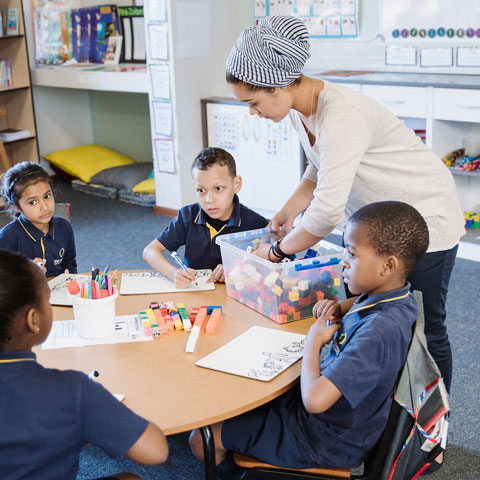
We can think of the classroom as having four teachers: the teacher, the learner, peers and the environment.
The teacher brings expertise, experience and intentionality. Effective teaching matters enormously. Teachers select and sequence content, explain and model, ask purposeful questions, check understanding, provide feedback and adapt instruction in response to evidence of learning. Research on effective instruction consistently reminds us that active learning does not mean leaving learners to discover everything for themselves. Explicit teaching, modelling, guided practice and carefully designed explanations remain essential.
The learner, however, is not simply the recipient of that instruction. Learning happens through what the learner does with what they encounter. Learners need opportunities to retrieve and connect prior knowledge, make meaning, explain their thinking, practise new skills, solve problems, ask questions and reflect on their understanding. The science of learning tells us that knowledge is strengthened when learners actively engage with it rather than merely encounter it.
Peers can also become powerful resources for learning. When learners explain an idea to one another, compare approaches, challenge reasoning, articulate misconceptions or work together to solve a problem, they can make thinking visible in ways that teacher explanation alone cannot. But collaboration is not automatically learning: it needs purpose, structure and appropriate teacher guidance. The goal is not simply to put learners together; it is to create productive opportunities for learners to learn with and from one another.
Finally, there is the environment. The routines, relationships, expectations, physical space and culture of a classroom constantly communicate what learning looks like. Does the environment communicate that mistakes are useful sources of information? That thinking matters more than simply producing an answer? That learners are expected to explain, question and persist? That everyone has a role in creating a community of learners?
The environment can either amplify learning or quietly work against it.
Thinking about these four “teachers” shifts our focus from teaching activity to learning activity. Instead of asking only whether a lesson was engaging, busy or well delivered, we ask more fundamental questions:
What is each learner thinking about? What are they doing with the knowledge? Who or what are they learning from? What evidence do we have that learning is taking place?
This does not mean that the teacher becomes less important. In fact, it makes the teacher’s role even more important. The teacher becomes the designer and orchestrator of learning opportunities, intentionally bringing together instruction, learner agency, peer interaction and the learning environment.
Our goal, therefore, is not simply to become better at teaching. It is to become better at creating the conditions in which learning can happen.
That means creating more opportunities for learning to happen between teacher and learner, learner and learner, learner and environment, and across the wider school community.
Because ultimately, a successful lesson is not measured only by what the teacher delivered. It is measured by what the learners thought, understood, practised, connected, questioned and ultimately learned.