We often hear that the 21st century belongs to Africa. A young population, rapid urbanisation, expanding innovation ecosystems and the scale of the continent’s opportunities all point in that direction. But potential does not fulfil itself. The African Century will depend, in no small part, on the quality of education we offer the next generation.
That is why families choosing a high school are asking increasingly important questions. Not only which curriculum their child will study, but what kind of thinker, problem-solver and leader that education will help them become. In a world that demands adaptability, judgement, initiative and resilience, curriculum matters but it is not the whole story.
At Nova Pioneer, we believe the most important question is not simply whether a learner follows IEB or Cambridge. It is whether their education is developing the habits, capabilities and sense of purpose they will need to lead meaningful lives in a fast-changing African context and an interconnected world.
Beyond syllabus coverage
Strong academic pathways matter. Qualifications matter. Academic rigour matters. But the world our children are stepping into will ask more of them than the ability to reproduce content in an exam. They will need to think critically, communicate clearly, work with others, navigate uncertainty and apply what they know to real challenges.
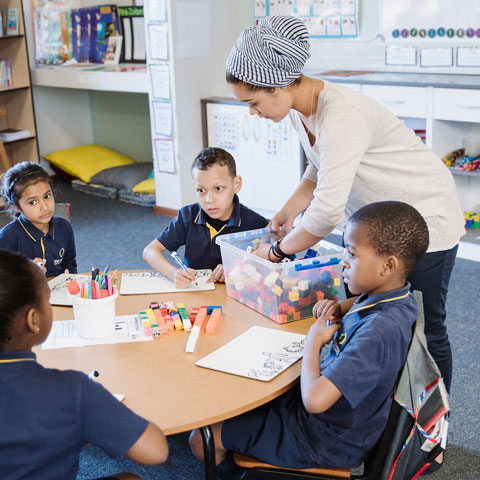
That kind of growth does not happen by accident. It depends on the daily experience of school – on the questions learners are asked, the level of challenge they encounter, the quality of feedback they receive and whether they are being taught to engage deeply rather than superficially.
This is where the teaching approach becomes so important. The same curriculum can feel very different depending on how it is brought to life.
The kind of education future leaders need
If we want to prepare young people to lead in the African Century, we need an education that does more than deliver results on paper. We need one that helps learners build intellectual discipline, curiosity, courage and conviction. We need classrooms where students are expected not only to know, but to question, connect, interpret and act.
That means an education that is rigorous, but not rigid. Ambitious, but not narrow. Rooted in high standards, while still connected to the realities of the world students will inherit and help shape.
For Nova Pioneer, that has always meant an approach built around enquiry, leadership development and real-world relevance. We want learners to investigate, debate, solve problems and wrestle with complexity. We want them to see learning not as a private race for marks, but as preparation for contribution.
Where curriculum fits in
This does not make curriculum unimportant. It makes it part of a bigger picture.
Both IEB and Cambridge are strong academic pathways. Each offers rigour, credibility and meaningful opportunities for learners. Each can support ambitious futures. But neither pathway, on its own, defines the full quality of a child’s education. What matters just as much is whether the school uses that pathway to develop deep thinking, independence and genuine capability.
The IEB pathway offers a qualification rooted in the South African context, with strong emphasis on application, analysis and conceptual understanding. Cambridge offers an internationally recognised route with its own structure, progression and global familiarity. Both have value. The better question is not which label sounds more impressive, but what kind of education a learner is experiencing within that pathway.
An education connected to context
For young people growing up in Africa today, relevance matters. A strong education should not feel detached from the places, people and possibilities around them. It should help learners understand the context they are part of and imagine the role they might play in shaping it.
That does not mean limiting ambition to one geography. On the contrary, it means preparing students to move confidently between local and global contexts – able to engage the world, while still grounded in the realities that matter here at home.
At Nova Pioneer, we believe this is one of the responsibilities of education in the African Century: to prepare young people who are not only globally competent, but also deeply connected to the communities, questions and opportunities of this continent.
What the Nova Way adds
At Nova Pioneer, our aim is not simply to guide students through a curriculum. It is to help them become the kind of young people who can use their education well.
That means building Character, Capabilities and Connection alongside academic strength. It means teaching in a way that develops independent thought, clear communication, resilience and purpose. It means creating schools where high expectations are paired with meaningful opportunities to lead, reflect and grow.
Whether a learner follows Cambridge or IEB, that broader educational commitment remains the same. The pathway may differ, but the purpose does not. We are still working to prepare students to think deeply, lead responsibly and contribute meaningfully in the world they are entering.
Preparing builders of what comes next
The African Century will not be shaped by qualifications alone. It will be shaped by people. People who can think with clarity, act with integrity, respond to complexity and build where others only critique. Schools have a responsibility to help form those people.
That is why the most important educational question may not be “Which curriculum is best?” but rather, “What kind of human being is this education helping my child become?”
At Nova Pioneer, we believe that is the question worth building schools around.