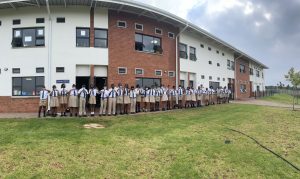
Novaneers admired for their strong set of values and principles

Take a few seconds to think of someone that you deeply admire…  This could be a friend, a colleague, a family member or maybe someone famous. Now note down your answers to these 6 questions, as you keep this person in mind…   Do they:  believe that they can achieve

Take a few seconds to think of someone that you deeply admire… 

This could be a friend, a colleague, a family member or maybe someone famous.

Now note down your answers to these 6 questions, as you keep this person in mind…


Do they: 

  • believe that they can achieve more by working together with others?
  • see failure as an opportunity to grow?
  • set high standards for themselves?
  • try to come up with solutions when faced with a problem?
  • put others before themselves and engage with those around then with humility and generosity?
  • remain open to learning and discovering new things?

If most of your answers were “yes” to the questions above, the person that you were thinking about and admire is undoubtedly someone who lives their life guided by a strong set of values and principles.

You may find it interesting that there were purposefully no questions above that were centred on the person’s expertise, accomplishments, capabilities, intellect or professional/career success. The person that you had in mind may exemplify all or most of the qualities portrayed in the 6 questions AND they may also be very smart, accomplished and successful in their field. (Whilst I don’t deny the value that success in one’s chosen profession or field brings, it certainly cannot be and typically isn’t, the only important ingredient!)

So my point is that many people that we admire are first and foremost deeply principled, have a growth mindset and live their lives with integrity. Isn’t this what each of us parents want for your children as they navigate their way through life… to be beacons for others around them appreciated and admired for their resilience; their selflessness; their grit and determination in the face of adversity; their curiosity and openness to grow and learn?

At Nova Pioneer, we place a lot of care and thought in integrating our school’s six culture principles into the in-class and extra-mural experiences, into how our lesson content is designed and how it is delivered. 


We have seen the power of helping students as early as pre-primary and through primary and secondary school to live by, to learn by and be guided by our SIX NOVA PIONEER CULTURE PRINCIPLES: 

  • Enquiry-based learning means that Nova Pioneer students are encouraged to ask questions; they research and explore various topics (rather than just been lectured on these) which means that they foster a sense of curiosity and exploration from a young age. They become life-long learners. Nova Pioneer current students and alumni are described as curious and wanting to learn and discover more and more about topics.  (Joy of Learning).
  • Our students are purposefully challenged; they are not scared to try new things; to fail and learn from these experiences. They also embrace feedback and see the value of giving and receiving feedback (Always Growing).
  • Novaneers work in groups on tasks, class-work and projects. They quickly experience the benefits of collaboration – a life-long skill (Greater Together).
  • It’s with great pride that we celebrate Novaneer students of all ages for their service within the school and within their community, selflessly helping others most in need (Servant Leadership).
  • Novaneer students set high goals for themselves because they are not afraid to fail and because they are not scared to try new things. They build self-confidence and set their targets high (High Expectations).
  • It is very rare that a Nova Pioneer student approaches their teacher or fellow Novaneer with a problem without a suggested solution. Novaneers are encouraged to be critical thinkers and natural problem solvers (Solutions First).

Cast your mind forward 10 or 20 years from now. Someone you know is asked to think of a person that they most admire and it is your child that comes to their mind. It is your child (probably a young adult by then) that they admire because they say that your child:

  • believes that they can achieve more by working together with others
  • sees failure as an opportunity to grow
  • sets high standards for themselves
  • comes up with solutions when faced with a problem
  • put others before themselves and engages with those around then with humility and generosity
  • remains open to learning and discovering new things.

Nova Pioneer believes that all schools should place as much focus, value and emphasis on character and value development as they do on academic excellence. Is your child’s current school doing this?


Nova Pioneer students celebrate strong Cambridge results

Nova Pioneer Schools for Innovators and Leaders, recently celebrated their Midrand students’ Cambridge Checkpoint results. Nova Pioneer students achieved scores ahead of the international benchmark for English and Science, whilst staying at pace with international trends for Maths.    Nova Pioneer is a pan-African independent school group that builds and

Nova Pioneer Schools for Innovators and Leaders, recently celebrated their Midrand students’ Cambridge Checkpoint results. Nova Pioneer students achieved scores ahead of the international benchmark for English and Science, whilst staying at pace with international trends for Maths. 


Nova Pioneer is a pan-African independent school group that builds and operates world-class, affordable schools, offering students grades from preschool through to secondary. The school group offers Cambridge, an internationally accredited curriculum, where students can write their Checkpoint, IGSCE, AS-Level, as well as their A-Level examinations in their 13th year. 


Nova Pioneer Midrand’s current Grade 7 and 8 students participated in the Cambridge Primary Checkpoint last Spring. Whilst normally administered only in the Grade 6 year, the advent of COVID in 2020 resulted in significant interruptions in the administration of these exams by Cambridge International. The disruptions as a result of COVID over the last two years have made the results achieved by these students even more impressive. 

 
At the prize giving, Nova Pioneer acknowledged their Grade 7 top achievers for the 2021 Checkpoint, including –
  • Shalathi Shikwambana for English and Maths, as well as being the overall top achiever in the grade
  • Lwandile Mhlungu for English and Maths
  • John-David Malaba for Maths
  • Casey Oosthuzien for her top performance in Science  


In Grade 8, Nova Pioneer celebrated – 
  • Kgosi Kekane for his top performance in Maths
  • Kayden Reddy for Maths, as well as being the overall top achiever in the grade
  • Yuveer Ramalal for Maths


Xolisa Luthi, the school leader for Nova Pioneer Midrand Secondary, said that he was thrilled to have this opportunity to engage in the assessments, which provide insight into how Nova Pioneer students are progressing in their mastery of the curriculum and in their readiness for Secondary school.   


Mr Luthi expressed gratitude to the Nova Pioneer teachers and leadership team. “Our students’ impressive results reflect their tremendous diligence and tenacity, as well as the unstinting support and inspiration of their teachers. We also thank our parent community for their continued partnership”.


Nova Pioneer is currently operational in both South Africa and Kenya with the mission to develop generations of innovators and leaders who will shape the African Century. Nova Pioneer Midrand Secondary School opened its doors in January 2022 and welcomed their inaugural class of Grade 8’s. The school will expand teaching and learning to accommodate families of Grades 8 to 13 students in the Midrand area and is now enrolling for Grade 9.


The Answer to School Lunches: The Bento Box

In Japan, the word ‘bento’ is associated with the word for ‘convenience.’ The bento box is a convenient way to carry a home-packed lunch—or any meal, but especially a single meal eaten during work or school day. The earliest take-along meals date to the 5th century in Japan, when farmworkers,

In Japan, the word ‘bento’ is associated with the word for ‘convenience.’ The bento box is a convenient way to carry a home-packed lunch—or any meal, but especially a single meal eaten during work or school day. The earliest take-along meals date to the 5th century in Japan, when farmworkers, hunters, or soldiers would pack food to take along for the day. These humble on-the-go meals eventually evolved into the boxed lunch that would be dubbed as the bento box by roughly the 12th century. They would often contain rice and dried meats.

By the 16th century, the bento box became more refined. Its use spread from work-related pursuits to cultural excursions such as visiting the theatre or attending outdoor activities and festivals. At this point, the boxes began to feature beautiful designs and lacquer work. Books began to be published about what to cook and how to pack bento boxes for special occasions.

Today, the tradition of the bento box is still widely practiced in Japan, but its popularity has spread around the world. Today’s bento boxes are typically designed with multiple compartments for rice, protein, fruits, and vegetables. Each tray can be easily removed for eating and cleaning. People can fill their bento boxes with any type of food they like, including snacks and sandwiches, but the main ingredients in Japan tend to revolve around the basics like rice, meat, and vegetables.

The bento box concept has spread all over the world along with many other aspects of Japanese culture. Many people fill their boxes with ingredients they happen to have on hand, such as leftovers. Unlike Western-style lunch boxes, the bento box is a well-organized system with various compartments and an easy-to-clean design. Here, we’ll explore this useful Japanese custom and why you might want to adopt bento box use.


What Are Some Benefits of Using a Bento Box?

Although you might be partial to your old lunchbox and thermos or have gotten used to carrying a sack lunch or dining out, there are some decided advantages to using a bento box to transport your lunch each day. There are many benefits of bento box use, such as:


Bento Boxes Are Environmentally Friendly


A bento box is a sustainable feature because you can use it over and over again. Each compartment is designed to hold different ingredient amounts. There is no need to use disposable plastic bags because small items such as crackers or raisins can be stowed in a small lidded container that fits inside the larger box. Upon returning home, each container can be washed and reused the following day.


Bento Boxes Keep Foods Fresh


Each bento box container is lidded and seals tightly; this helps keep food fresh and tasty. Depending on what types of food you’re packing for the day, you may wish to include a small ice pack in your bag to keep food cool, especially during the summer months.


Bento Boxes Are Easy to Clean


Many of today’s bento boxes and their containers are easy to clean and even dishwasher safe. If you don’t prefer to hand wash them, you can generally place them on the top rack of your dishwasher for cleaning. Of course, always check each box to ensure it can be cleaned in the dishwasher first.


Bento Boxes Are Leak-Proof


Since each bento box container comes with a tight-fitting lid, they are conveniently leak-proof. So, there’s no fear that items like applesauce, yogurt, or dipping sauces will leak out and soil the bento box, briefcase, school bag, etc. The leak-proof design allows people to carry sauces and liquids that they might otherwise have avoided because of the inconvenience. The bento box makes it a breeze to carry just about any ingredient with no hassle.


Bento Boxes Promote Portion Control


Each container in a bento box affords just enough room for a single serving of items. This helps prevent people from over-eating. Using a bento box allows you to limit amounts to ‘just the right amount easily.’ Portion control is essential for both kids and adults, particularly as obesity rates among both demographics are increasing. Bento boxes promote healthful eating even as they allow for a terrific variety of ingredients.


Bento Boxes Are Economical


If you want to save money on lunch, carrying a bento box is a great way to do so. It’s much cheaper to pack your own ingredients from home than to purchase lunch at a restaurant. You can pack leftovers from your evening meal or inexpensive lunch items that you have on hand.


Bento Boxes Are Easy to Transport


Even though they come in many designs today, manufacturers still produce easy-to-carry styles. A bento box is compact and usually fits in larger handbags and briefcases, school bags, or backpacks.


What Are Some Popular Types of Bento?

In Japan, there are various types of bento. Some are popular with children; others with adults. If you want to pack your bento box in the Japanese style, here are some bento types to consider:


Kyaraben


Kyaraben bento boxes are specially designed for kids. Parents pack them with rice balls and other ingredients formed into the shapes of animals, plants, or anime characters. For instance, panda bear rice balls decorated with other ingredients to resemble the bears are very popular in kyaraben bento boxes.


Aisai


Wives and mothers will often pack aisai bento boxes. In fact, the term means “made by a loving wife.” Especially popular in the spring, aisai bento boxes often feature designs that signify love and affection.


Koraku


A koraku bento box is a boxed lunch for a small group of people. For instance, rather than packing individual boxes for a picnic, a koraku bento box suffices for the group.


Makunouchi


The makunouchi bento dates back to the 16th century, when people would eat their meal between theatrical acts. The word translates to mean “between acts.” Traditionally, makunouchi bento features a meal of rice, meat, eggs, vegetables, and pickles.


Oekakiben


Oekakiben bento features ornate or highly stylized ingredients made to look like pictures. Highly artistic, oekakiben bento might resemble an ocean or garden scene whereby each ingredient is fashioned into an object such as a plant or animal.


Ekiben


Ekiben bento is ultra-convenient because these boxes can be purchased at train stations or bus stations for workers who were too busy to pack their bento that day. They typically contain a mix of ingredients such as meat, fish, rice, and vegetables.


Konbini


Konbini are available in convenience stores and are mass-produced for people who want to purchase their lunch or dinner. Similar to ekiben, these bento boxes are generally sold in shops and feature traditional bento items like rice, vegetables, and fish. They are generally less expensive than purchasing lunch at a restaurant or food stand.


What Should You Pack in Your Bento Box?

First, of course, you’ll need a bento box. Fortunately, there is a vast array to choose from. Bento boxes come in many styles and designs. To pack your bento box, you’ll want to include items such as:

  • Portable cutlery: Most bento boxes contain space for eating utensils
  • Rice: Rice is a staple for most Japanese bento, but if you’re trying to cut back on carbs, you can pack a salad or other ingredients
  • Meat or fish: Japanese typically pack at least one protein in their bento boxes as part of a balanced meal.
  • Eggs: since bento box compartments are lidded, you can easily pack an egg however you like; many people opt to bring an omelet or boiled egg.
  • Vegetables: include items in your bento box such as carrot sticks, sliced bell pepper, or salad as part of your healthy meal.
  • Fruit: you can pack bento containers with fruits like grapes, apple slices, raisins, or blueberries.


Making a Bento Box 101

Use these ideas to put your bento box together:


Readying Your Bento Box


Be sure that each compartment of your bento box and its lids are clean and ready for packing before you place food items into it. There are many styles of bento boxes commercially available today. Choose one that’s easy for you to maintain—and fun and stylish too!


Packing the Bento Box


To pack your bento box, you should plan to divide your meal proportionally. In Japan, people often follow a 4:3:2:1 ratio. Rice or salad, for instance, might encompass the largest portion of the meal, but you can customize the ratio to suit your preference for your ingredients. Be sure that your lids snap tightly to prevent leaking. Ideally, you should include different food groups to pack a healthy bento lunch and keep your meal well-balanced.


Choose Appealing Ingredients


Part of the charm of the bento box is its variety and the presentation of ingredients. While many Japanese parents often choose ingredients for kids that are not only healthful but attractive (i.e. bright green grapes, carrots, cherry tomatoes), you can choose just about any type of food that appeals to you. Consider color, texture, and nutritional value when choosing your bento box ingredients.


Pack in Order


Be sure to pack your food ingredients in order of placement so that everything fits neatly in your bento box compartments. Lids need to fit their containers tightly, so be sure you don’t overfill the compartments. You don’t want to lose all that hard work to make it appeasing lost when you pack your bento box improperly.


Bento Pro Tips

If you’re just getting started with bento, it won’t take long to become a pro. Here are a few tips to help you boost your bento know-how:


Start Small


You don’t have to pack an elaborate bento box; remember that convenience is at the heart of this practice. Some people choose bento boxes that contain only two compartments. If you prefer simple meals, you can opt for this style. On the other hand, if you prefer various foods, choose a bento box with four to five small compartments—it’s really up to you.


Set aside Preparation Time


You’ll find that when you set aside a decent amount of time, you can pack a healthier—and tastier—bento box. You’ll need some time to wash, cut, and pack your fruits and vegetables, for example. If you want to create fun ingredient designs, you’ll definitely need some extra time to pack your bento. Try searching sites like Pinterest to find creative bento box ingredient concoctions, especially fun for kids and teens.


Be Patient


If you’re packing warm foods, you’ll need to wait for them to cool before packing them in the bento box. Once the foods are lukewarm, you can add them to the containers and then snap their lids on tightly. Although sauces can be packed in a bento box, soup may not be the ideal food selection for these types of containers. It would be hard to reheat while also may risk leaking into other compartments.


Be Mindful of Texture


Japanese often include foods with different or unique textures in bento boxes. This adds more interest to lunch. If you’re packing bento for kids, include foods with different shapes and colors to entice them to try new foods. Choose ingredients like cheese cubes that are soft and pretzel sticks that are crunchy. Multiple textures add a fun element for kids’ lunches.


Meal Preparation for the Week


You can make bento packing easier by setting aside some time on the weekend and meal prep your bento items. You can do a lot of fruit and vegetable chopping, for instance, at one time. Plus, it’s often cheaper to purchase many items in larger quantities. You can break them down to bento-sized portions once you’re home. It can also be something fun to do in the kitchen as a whole family. Kids can help wash fruits and veggies and have a hand designing their lunches too.


Lunching with a bento box is a fun, healthful, and eco-friendly way to dine. Use this guide to help you get started with bento box preparation. Remember, you can also customize your bento, so it’s no problem if you need to follow a special diet.

Originally posted on Porch.com

Nova Pioneer students celebrate 100% Cambridge A-Level Pass Rate

Celebrating our Novaneers 100% pass rate for Cambridge A-Levels    Students at the Nova Pioneer Ormonde Secondary campus elated as they celebrate a year of exceptional results. Nova Pioneer is a pan-African independent school group that builds and operates world-class, affordable schools, offering students grades from preschool through to secondary.

Celebrating our Novaneers 100% pass rate for Cambridge A-Levels 


Students at the Nova Pioneer Ormonde Secondary campus elated as they celebrate a year of exceptional results.

Nova Pioneer is a pan-African independent school group that builds and operates world-class, affordable schools, offering students grades from preschool through to secondary. The school offers Cambridge, an internationally accredited curriculum, where students can write their IGSCE, AS-Level and A-Level examinations.

The A-Level year is ostensibly the equivalent of Grade 13 at secondary school level and provides students a world-recognised exit qualification to widen the scope of their university studies both locally and internationally and, depending on how they performed in their IGCSE and AS levels, gives students the opportunity to improve their options of getting into their preferred course.  

Theuns Opperman, the school leader for Nova Pioneer Ormonde Secondary, said that he was pleased with the students’ results as they, again, exceeded the national subject pass average.

“It is a pleasure to share in our students’ successes and excitement about their futures and to hear personally from them how attending Nova Pioneer has laid the foundations for  their aspirations. Their exceptional results reflect the tremendous diligence of our students and their tenacity, as well as the unstinting support and inspiration of their teachers,” said Opperman.

“We believe these results demonstrate the value in the completion of an A-Level year – who wish to apply to the top South African and international tertiary institutions, and also for those students wishing to improve on their previous year’s AS level results.”


Academic excellence a priority 


Chief Academic Officer, Rahel Wondwossen said they were proud of the results achieved by their Grade 13 class of 2021. 

“I wish to commend our students and teachers for their commitment and hard work. The results achieved this year are a testament to their hard work and dedication leading up to this point and will underpin their successful progression into the future. Many of our students have now earned the necessary grades to secure places at universities locally or internationally should that be their plan,” said Wondwossen.

“We want to see students leave Nova Pioneer with the best possible academic qualifications for them and a love of learning that will remain with them for life. We are passionate about ensuring excellent outcomes for our pupils in order to improve their life opportunities. Thus, we are exceptionally proud of what the students have achieved,” she said.


Student spotlight


Top performing 2021 student in the A-Level year, Lindokuhle Nyoka says she plans to study medicine at the University of Cape Town (UCT) and is excited about the prospect of becoming the first medical doctor in the family.

“A-Levels are not easy but through hard work, determination and a collaborative attitude, acquiring good results is possible. I am really proud of my class,” says Nyoka. 

“I also appreciated the Greater Together culture principle and how my classmates and I were able to live it out. With the help of others, I was able to grow both academically and emotionally. My classmate Leslie Mpemba helped me tremendously in the area of personal development, whilst Colbert Jansen helped me with my academics.”

Attiyah Ally, who plans to pursue a career in science, was the top performing student in the AS-Level, achieving As in English and Mathematics. She says while she is happy about her academic achievements, she is really proud of the role that she played in the Student Council as the Academic Chair.

“I have seen tremendous growth in my character through the application of the “Always Growing” culture principle. I used to feel so exasperated by the smallest faults, but now I confidently embrace my failures and mistakes as an opportunity to improve and nurture success. I have learned this through my academic work as well as my role in the student council,” said Ally.


Prepared to thrive post school


Departing Nova Pioneer students who have completed their A-Levels, leave feeling confident as they  know what they want to pursue beyond school. Wondwossen says this was made possible through the support of the Post School Success (PSS) Team and the school’s Psycho-social Support Team.

Wondwossen explains, “We established the PSS Team with the aim of equipping students with practical tools for preparation in life after school. The team supports students in understanding their options and what benefits and challenges each may come with.” 

The PSS team, in collaboration with the psycho-social support team, provides students with personalised assessments and career guidance based on each of their unique talents and skills. They also support in mentoring students as they prepare for life after school, as well as giving them assistance and direction on applying to the best tertiary learning institutions nationally and globally.

Both teams have, and continue to, support all students’ as they explore their options to study further or to pursue other paths.

“Also, it is important to note that the journey of a Nova Pioneer student does not end with their exit examinations – once a Novaneer, always a Novaneer. We look forward to engaging with our Novaneers who will now be part of Nova Pioneer’s active and networked pan-African Alumni community,” she added. 

A Year of Great Potential

Dear Novaneers   Happy new year!  I am writing you this letter from Johannesburg, where the final rainy week of December has given way to a new year’s weekend of sunshine and brilliantly clear blue skies.  While 2022 will no doubt have its challenges, the year has started with a

Dear Novaneers


Happy new year!  I am writing you this letter from Johannesburg, where the final rainy week of December has given way to a new year’s weekend of sunshine and brilliantly clear blue skies.  While 2022 will no doubt have its challenges, the year has started with a great new energy.  May it be a sign of a positive year ahead!

Looking back to 2020 and 2021, I am both proud of and grateful for the Nova Pioneer community: for our students, families, and teammates.  Your commitment to our students and to our culture principles of Greater Together, Solutions First and High Expectations, enabled us to reach new educational heights, even as we have persevered through the shocks and strains of the pandemic.  In 2021, Novaneer students published books, won gold and silver medals in the Yale World Scholars Cup, placed 1st and 3rd place nationally in Kenya’s Junior Achievement Entrepreneurial Company Programme, travelled internationally, organised campus programmes, conducted community service, studied diligently, supported each other and experienced great personal and academic growth.  Across all our secondary schools, our graduating students in 2021 built on and surpassed the exam success of their predecessors (January 2021 in South Africa, July 2021 in Kenya).  Well done to all our students and teachers, and to the families and teammates who support them!  

So what lies ahead?  In 2022 we will continue to focus on the intention we set 12 months ago: to build every Nova Pioneer school into a Beacon of Excellence and Value.  Here is what we wrote last year:

In 2018 former President Kgalema Mothlanthe visited Nova Pioneer and challenged us to become beacons of excellence, demonstrating what is possible in African education.  The transformational power of institutions of excellence resonates with us.  They stand out for doing distinctively good work and are beacons of possibility. 

Being Beacons of Excellence and Value means sharpening our focus on educational excellence, with an attentiveness to understand what our students and parents value.  It means making clear choices about which of those we can best serve, and then visibly delivering on it.

That vision served us well in 2021 and the early feedback from our families was very positive.  Twice a year we seek our families’ feedback and voice through a biannual survey.  In 2021, across Kenya and South Africa, our family positivity rating increased by a remarkable 50%, from an already strong base! 

Through those surveys, Novaneer families told us they valued [1] Nova Pioneer’s academic rigour and 21st-century preparation, [2] the care and individual attention shown by our teachers for each of our students, [3] improvements in communication, and [4] the way our schools and teachers adapted to the pandemic, ensuring safe and continuous learning.  Once again, I am grateful for the commitment and care of our students, teachers, and support teammates alike; as well as for our parents’ generous and steadfast partnership.

However, we have more work to do.  Through the 2021 surveys, our families asked that we stay focused on excellence in each of the areas mentioned above, and that we expand the opportunities that our students have to explore and develop their interests and talents beyond the classroom.  Informed in part by that feedback, in 2022 each Nova Pioneer School will refresh its Individual School Strategy with an eye to:

  • Enriching and expanding student opportunities to pursue their interests and connect with others, both inside and outside the classroom (including across our schools and enabled by technology).  Nova Pioneer schools each currently offer a range of extracurricular and cultural opportunities, some of which may differ for each school.  While Nova Pioneer schools are made consistent by our shared mission, culture principles, and educational approach, each school is a unique community of students, faculty, and families, in a unique local context.  That offers each school unique opportunities.  Therefore I will defer to your school to communicate over the course of this year about the opportunities that are available, and any new ones that become available as a result of further planning.  Organisationally, we will invest in our Post School Success programme and personnel so that we continue to give Novaneers a ‘leg-up’ in preparing for tertiary and other post-school opportunities.


  • Operating as efficiently as possible to defend affordability and value for families.  Even as we continue to prioritise educational excellence, we must remain vigilant on cost-effectiveness for families in the face of rising economic inflation.   This may require making some judicious choices to focus on what matters most to our student’s education, and to communicate clearly and openly with our families about those so that we remain aligned on expectations, and can then deliver on them.  


  • Ensuring school fiscal health and growth.  Each Nova Pioneer school has been founded as an institution to serve generations of children.  As we plan and build together for the long term, we ask for your support as our partners and strongest ambassadors to grow our schools.

As we do all that, we will keep true to our foundations as Nova Pioneer: [1] our mission to develop innovators and leaders, [2] our culture that is built on our six culture principles; [3] our commitment to academic excellence; and [4] our vision of learning, where every Novaneer discovers that she or he is fundamentally capable.   By doing those things we will be able to further grow our students’ achievements; shine brighter as beacons, and deliver on our mission to develop the innovators and leaders who will shape the African Century.  

With gratitude and best wishes for a positive 2022,

Chinezi Chijioke

Founder and CEO, Nova Pioneer 


Celebrating Academic Excellence

I would like to take this opportunity to celebrate our top academic achievers (Grade 8 -10) for 2021. I wish to congratulate these students for managing to produce these excellent results in what was, again, an unusual year. We are very proud of them. They exemplify our Culture Principles of

I would like to take this opportunity to celebrate our top academic achievers (Grade 8 -10) for 2021. I wish to congratulate these students for managing to produce these excellent results in what was, again, an unusual year. We are very proud of them. They exemplify our Culture Principles of High Expectations, Always Growing and being Solutions First. Well done!

While recognising these examples of excellence, I also wish to congratulate all the students who made the best of this year. Overall, our data show an ongoing improvement in the academic performance of almost all of our students. I must commend our teachers on also pulling out all the stops and not allowing the complexities of the past two years to get in the way of delivering excellent teaching. I salute you.

Lastly, to our parents. You have been incredibly supportive of both us as a school and your children. In a true spirit of being Greater Together, you have rolled with the punches while trusting us to get on with the job. It is such a privilege to help lead a school when you feel that you have the implicit trust and support of parents. We thank you.

We look forward to hosting a formal awards assembly in the new year to recognise these students as well as the IGCSE, AS and A-level students.


Academic Awards Term 3 2021 for Grades 8 to 10


Academic half-colours


Grade 10: minimum of 4 A’s in the November examinations

Grade 10

– Arjun Thulsie (6 As)
– Afrikaans (82%)
– Computer Science (96%)
– English (82%)
– Physics (88%)
– Biology (91%)
– Mathematics (92%)


Academic certificate of merit


Grades 8-10: minimum of 3 A’s in the November examinations

Grade 10
Gadija Shaikh (3 As)
– Art and Design (81%)
– Biology (81%)
– Mathematics (82%)

Grade 9
Sabeeha Adams (6 As)
– Commerce (94%)
– Geography (80%)
– English (83%)
– History (97%)
– Mathematics (80%)
– Science (85%)

Naledi Djiogo (5 As)
– Commerce (80%)
– Geography (93%)
– History (94%)
– Mathematics (92%)
– Science (90%)

Keziah Pillay (5 As)
– Afrikaans (86%)
– Commerce (84%)
– Geography (85%0
– History (91%)
– Science (80%)

Mikayla Bayat (4 As)
– Afrikaans (83%)
– Commerce (84%)
– Geography (87%)
– History (90%)

Nene Manyana (4 As)
– Commerce (83%)
– Geography (90%)
– History (81%)
– isiZulu (92%)

Nhlakanipho Magazi (4 As)
– Commerce (86%)
– History (100%)
– Mathematics (82%)
– Science (80%)

Jordan Roux (3 As)
– Geography (85%)
– History (88%)
– Science (81%)

Grade 8
Simphiwe William (7 As)
– Chemistry (81%)
– English (87%)
– Humanities (89%)
– Biology (90%)
– Business Studies (89%)
– Physics (88%)
– Mathematics (95%)

Matabo Kekana (6 As)
– Chemistry (81%)
– Humanities (83%)
– Biology (82%)
– Physics (96%)
– isiZulu (87%)
– Mathematics (90%)

Kwanele Dlangisa (4 As)
– Humanities (81%)
– Biology (82%)
– Physics (92%)
– isiZulu (86%)

Njabulo Sithole (4 As)
– Biology (88%)
– Business Studies (81%)
– Physics (96%)
– isiZulu (80%)

Thabiso Rasimeni (3 As)
– Chemistry (84%)
– Biology (93%)
– Physics (92%)

Molemo Kodisang (3 As)
– English (81%)
– Physics (84%)
– isiZulu (80%)

Lethabo Thinane (3 As)
– Biology (87%)
– Physics (87%)
– Humanities (85%)

Caris Ayemole (3 As)
– Chemistry (83%)
– English (85%)
– Biology (85%)

Ashton Wax
– Chemistry (80%)
– Biology (80%)
– Physics (88%)


Grade 10 Subject awards


Top 3 per subject (80% minimum) based on year mark

Grade 10

Afrikaans
1. Arjun Thulsie (81%)
Computers
3. Saad Sattar (87%)
2. Sitara Singh (92%)
1. Arjun Thulsie (97%)

English
2. Ungowakho Madolo (80%)
1. Arjun Thulsie (81%)
Physics
1. Arjun Thulsie (86%)

Biology
3. Ungowakho Madolo (86%)
2. Kewell Moodley (87%)
1. Arjun Thulsie (91%)

Business Studies
1. Tlotlo Oliphant (80%)

isiZulu
3. Lebogang Noni (80%)
2. Xolisile Buthelezi (83%)
1. Siphokazi Nxumalo (88%)

History
2. Alyssa Wax (83%)
1. Ayandza Dlamini (84%)

Mathematics
3. Ungowakho Madolo (90%)
2. Sitara Singh (92%)
1. Arjun Thulsie (94%)


Grade 9 Subject Awards


Top 3 per subject (75% minimum) based on year mark


Afrikaans
3. Mikayla Bayat (81%)
2. Lekeisha Campbell (82%)
1. Keziah Pillay (85%)

Commerce
3. Keziah Pillay (85%)
2. Nhlakanipho Magazi (87%)
1. Sabeeha Adams (93%)


Geography
3. Sabeeha Adams (83%)
2. Keziah Pillay (84%)
2. Mikayla Bayat (84%)
1. Naledi Djiogo (89%)
1. Nene Manyana (89%)

English
3. Naledi Djiogo (78%)
2. Naseeha Majam (79%)
2. Mikayla Bayat (79%)
1. Sabeeha Adams (84%)

History
3. Mikayla Bayat (92%)
3. Keziah Pillay (92%)
3. Naledi Djiogo (92%)
2. Samukelisiwe Nkwanyana (94%)
1. Nhlakanipho Magazi (97%)
1. Sabeeha Adams (97%)

isiZulu
3. Nene Manyana (90%)
2. Nhlakanipho Mandlazi (91%)
3. Mbalenhle Mntambo (93%)

Mathematics
3. Nfihlo Mulamula (84%)
3. Mlindi Msimango (84%)
2. Naseeha Majam (87%)
1. Naledi Djiogo (91%)

Science
3. Sabeeha Adams (85%)
2. Naseeha Majam (86%)
1. Naledi Djiogo (88%)


Grade 8 Subject awards


Top 3 per subject (75% minimum) based on year mark


Chemistry
3. Simphiwe William (84%)
2. Matabo Kekana (85%)
1. Caris Ayemole (86%)
1. Humairah Cornelius (86%)

English
3. Caris Ayemole (81%)
2. Cade ́ Jansen (84%)
1. Simphiwe William (87%)

Humanities
3. Lethabo Thinane (83%)
2. Kwanele Dlangisa (86%
1. Simphiwe William (88%)

Biology
3. Lethabo Thinane (85%)
2. Matabo Kekana (86%)
2. Bhavesh Thulsie (86%)
1. Simphiwe William (93%)

Business Studies
2. Matabo Kekana (81%)
1. Simphiwe William (86%)

Physics
3. Thadeous Snyders (90%)
2. Jabulani Khuzwayo (91%)
2. Thabiso Rasimeni (91%)
2. Balisa Lushozi (91%)
1. Matabo Kekana (92%)
1. Njabulo Sithole (92%)

isiZulu
3. Amahle Nkosi (84%)
2. Aobakwe Mchunu (86%)
1. Duduzile Ndinesa (87%)

Mathematics
3. Jabulani Khuzwayo (84%)
2. Matabo Kekana (93%)
1. Simphiwe William (96%)


Grade 8 Top students per grade


Based on the minimum average of 80% across all subjects


2. Matabo Kekana (84% av.)
1. Simphiwe William (85% av.)


Grade 9 Top students per grade


Based on the minimum average of 80% across all subjects


3. Mikayla Bayat (83% av.)
2. Naledi Djiogo (84% av.)
1. Sabeeha Adams (85% av.)


Grade 10 Top students per grade


Based on the minimum average of 80% across all subjects


2. Sitara Singh (80% av.)
1. Arjun Thulsie (86% av.)


Progress award


Most improved student in the whole school based on the ranking change between Term 1 and 3


Ashton Wax- Grade 8
Term 1- 26th place
Term 3- 9th place
Improved 17 places during the course of the year!


Want to get R7000 off your tuition? This is how to do it … 

Nova Pioneer believes in building a compassionate, like-minded community   Once your child is enrolled at Nova Pioneer, you become part of our supportive and passionate community – a group of parents from all walks of life – who all contribute to our school in various ways for the betterment

Nova Pioneer believes in building a compassionate, like-minded community


Once your child is enrolled at Nova Pioneer, you become part of our supportive and passionate community – a group of parents from all walks of life – who all contribute to our school in various ways for the betterment of our students’ education. It is through this community that our school Culture Principles come alive, even at home. 

Nova Pioneer parents share in our mission of building the next generation of innovators and leaders and thus, we look to them to help us find more families who share our vision and values. This is because we believe in building a community of like-minded people who want to come along for the journey, and share in our story, as we continue to expand our offering throughout South Africa.


Benefits of growing our community


At Nova Pioneer, we know how important it is to build community. Who better to help us do this than our very own parents? As an existing Nova Pioneer parent, you could qualify for double the normal referral discount (R7000 off your tuition for a period of one year) when you refer a parent and they successfully enrol their child at any of our Nova Pioneer campuses for 2022 or 2023 between 8 December 2021 and 30 April 2022.


Which parents are eligible for the R7000 discount?


  • In order to successfully benefit from referring a student, the parent must apply to Nova Pioneer between 8 December 2021 and 30 April 2022 for enrolment in-year in 2022 or for 2023.
  • The parent must state that they were referred to by you (name and surname) when they fill in the online application form in the ‘how did you hear about us’ section.  
  • The referred parent needs to successfully enrol at Nova Pioneer by completing the full admissions process (detailed below).
  • Referred students cannot have a sibling currently or previously enrolled at Nova Pioneer. 
  • The referral discount is awarded to the youngest child – if you have only one child at Nova Pioneer, that child will receive the discount. 
  • You will be entitled to a R7000 discount per enrolled student that is referred up to five students (or a maximum tuition discount of R35000)
  • If you are not yet an enrolled parent, you ONLY qualify for this discount once you have confirmation of enrolment.
  • The discount is non-transferable and cannot be substituted for cash or a refund.
  • The referral discount will not be applied should the student account be in arrears at the point in time that the discount is allocated.
  • Nova Pioneer staff do not qualify.

What does “Successful Enrolment” look like: 


Step 1: Current family/ parent talks to a friend and tells them about Nova Pioneer.

Step 2: The prospective parent completes an online application form and in the ‘how did you hear about us’ section, they select ‘referred by a current parent’ and write the full name of the parent and student who referred them. We can only identify the family that referred you if they give us your first and last name.

Step 3: The prospective parent attends a Nova Pioneer event and the learner completes and passes, an assessment. 

Step 4: The prospective parent, who is very excited about Nova Pioneer, then completes all online forms and submits required documentation before our Finance Team completes the affordability check and gives go-ahead for enrolment fee payment.

Step 5: The prospective parent then pays the grade-relevant enrolment fee to secure their child’s spot. 

Step 6: The referral is then flagged to our Finance Team, who will pick up the name from the original application, and ensure your account reflects the referral discount once the student has started.


Preventing Bullying at School

The sad reality that is slowly starting to sink in about our childrens’ day to day experiences is that they are not only living through one pandemic that is shaping their futures, but they are also dealing with mental issues such as depression, anxiety and suicidal thoughts, often brought to

The sad reality that is slowly starting to sink in about our childrens’ day to day experiences is that they are not only living through one pandemic that is shaping their futures, but they are also dealing with mental issues such as depression, anxiety and suicidal thoughts, often brought to light by the effects of bullying.

Imagine waking up in the morning drenched in anxiety and a feeling in your gut that pushes you to jump back into bed. A crippling feeling that persuades you that stepping out of the door will in no way bring you any peace. For a lot of adults, this is a feeling that we can all relate to or at some point in our lives have felt, but for most of our children, this is a reality that they live out daily simply because school no longer feels like a safe haven for them to hang out with their friends during lunchtime and engage in fun extracurricular activities after school. Due to the rising numbers of bullying in schools, more and more children refuse to go to school, but it seems like now bullying is something that they can’t escape even when they are in the comfort of their own home.

There was a time when bullying was simply something that children experienced physically or verbally from their peers but with the prolific rise of social media and apps such as Twitter, TikTok, WhatsApp etc, bully’s have found a new ‘playground’ for them to torture their peers.

According to a 2018 Ipsos Global Adviser study conducted in 28 countries, it was confirmed that South Africa topped the statistics for cyberbullying with 25% of parents reporting that their children have been cyberbullied.

With our children moving to online classrooms and hybrid models of learning, it is becoming more and more important to monitor what children are doing online as they spend most of their time in front of screens.


Studies have shown that some of the signs to look out for if your child is being bullied online are:

  • Child appears edgy or nervous when engaging in online activities like receiving instant messages or emails, engaging in conversations on social media, etc;
  • Seems depressed, angry, irritable or frustrated after being online and may also seem regularly depressed;
  • Displays unusually secretive behaviour, particularly related to online activity;
  •  Avoids conversations about their online activities;
  • Abruptly turns off or walks away from the computer mid-use;
  • Stops using their devices unexpectedly;
  • Oversleeping or not getting enough sleep;
  •  Changes in eating patterns;
  •  Unexplained headaches or abdominal aches;
  • Disengagement from activities, hobbies or pastimes that used to interest them;
  • Is unusually withdrawn from friends and family; and
  •  Often telling you they are feeling ill to avoid going to school or to leave school early.

At Nova Pioneer we believe that it is important to constantly reinforce positive student interactions and are always engaging around bullying and how we can stop students from not only bullying but being bystanders that also do nothing when they see their fellow classmates being bullied. This year we were able to host our first anti-bullying picnic at our Midrand campus and hope to continue to spread the amazing work done by our Novaneers with the greater community.

In the event of a bullying incident, the school:

  • Intervenes immediately; stops the bullying behaviour as soon as we see it or become aware of it. 
  • Talk to the child that was bullied separately and obtain a vivid picture of what happened and how the child has been harmed. 
  • Talk to the bully separately. If more than one child is involved in perpetrating the bullying, talk to each of the perpetrators separately in quick succession.
  • Obtain a clear picture of what happened and remind child(ren) of the behaviour expectations. 
  • Talk to any bystanders separately. 
  • Arrange a meeting with the ‘injured party’ and the bully. The purpose of this meeting is to initiate a process of restorative justice. Perpetrators will have to face the consequences of their actions in terms of the Nova Pioneer Philosophy of Culture and Behaviour. However, perpetrators will also be provided with psychosocial support in order that they can better understand their behaviour so that it can be prevented from recurring. In other words, individuals will be held accountable for their actions within a system of support. 

For more information on understanding bullying, watch the full video here:


Calling all young footballers

This December 6th-10th, Coach Jared Engelbrecht will be leading the Get Your Kicks! soccer clinic at Nova Pioneer Paulshof.    Children aged 6-13yrs of all skill levels are welcome to participate and Novaneer students are eligible for a discounted attendance fee of R500 for the week.  The week-long programme consists of

This December 6th-10th, Coach Jared Engelbrecht will be leading the Get Your Kicks! soccer clinic at Nova Pioneer Paulshof. 
 
Children aged 6-13yrs of all skill levels are welcome to participate and Novaneer students are eligible for a discounted attendance fee of R500 for the week.  The week-long programme consists of daily 90-minute sessions in age-based groups, and with each session combining focused skills-development and coached games, culminating in a tournament on Friday.  
 
Any questions and comms can be sent via email to getyourkicks.clinic@gmail.com.  
 
 
Build your skills, have fun, and compete!
 

Mindfulness in the Classroom

Mindfulness refers to a state of mind where a person has a heightened awareness of the internal and external experiences that are occurring at the present moment. It is a practice where your mind and all its thoughts are quietened bringing a feeling of calmness and increased awareness and focus.

Mindfulness refers to a state of mind where a person has a heightened awareness of the internal and external experiences that are occurring at the present moment. It is a practice where your mind and all its thoughts are quietened bringing a feeling of calmness and increased awareness and focus.


The concept of mindfulness is thought to have been introduced to the west by Jon Kabat-Zinn in the late 1970s, who described it as “the awareness that emerges through paying attention on purpose, at that moment.


Now more than ever, teaching mindfulness in the classroom is essential. As the world is experiencing unprecedented times with the Covid-19 pandemic.  Students, teachers, and parents feel stressed and anxious.


We also live busy lives and find our thoughts buzzing with a myriad of things to do and worry about.


As educators, we know that children learn best when they are comfortable, feel safe, and relaxed. By incorporating mindfulness in the classroom, teachers can create an environment for their students that is nurturing and non-threatening. It can set the climate for the day that is optimal for learning.


There are many benefits to mindfulness for students:


  • Reduces stress and anxiety
  • Improves attention and focus
  • Improves the student’s cognitive performance
  • Better emotional and social intelligence
  • Improves memory


There are a few ways that our  teachers incorporate mindfulness into their classrooms, 


Mindfulness Through Breathing

Teaching children to breathe deeply into their stomachs when they feel stressed and anxious. This helps to calm their body and mind.


Mindfulness Through Sensory Experiences

Sensory experiences also help children to relax and focus. By playing relaxing or classical music with calming sounds, children can focus and concentrate on the task at hand. Work produced is of a higher quality and the classroom has a calm atmosphere.


Mindfulness Through Guided Imagery

Guided Imagery can develop children’s imaginations. It helps them to integrate learning with prior knowledge. When teachers introduce a new concept, they invite children to close their eyes and slowly talk them through a journey. In this way, the children can imagine and visualize – placing them in the right frame of mind and focus. In the younger classes, children can pretend they are the animals and mimic the sounds and movements of the animals. This just helps them to relate better to the topic that will follow.


At Nova Pioneer Ruimsig, our teachers incorporate all these strategies every day in their classrooms. You will always hear relaxing background music in each class when students are working independently. Music is also used to support transitions between centres. We use Guided Imagery in the younger grades to create a fun and interactive environment before the teacher introduces the new topic. Students are encouraged to close their eyes and imagine they are various characters or in a different setting to visualize the concept. This helps students to internalize the concept using all their senses. 


Our Grade  R, 1, and 3 classes actively practice meditation each morning. Teachers have noted the benefits of meditation in their classrooms, stating that their students are calm, focused, and are able to concentrate better throughout the day. 


Deep breathing techniques are also practiced after the lunch breaks and Physical Education (PE) transitions to help settle the class for the next lesson and put them in a calm and focussed frame of mind. 


As a result of practicing mindfulness on our Ruimsig campus, our students appear calm, relaxed, and happy.


Source:

http://www.educationalneuroscience.org.uk/resources/neuromyth-or-neurofact/mindfulness-has-a-place-in-the-classroom/#

https://childmind.org

https://www.edutopia.org/blog/integrating-mindfulness-in-classroom-curriculum-giselle-shardlow