Using MAP testing to assess skill gaps caused by school closures

School closures in 2020 caused some disruptions for all schools and particularly for the students. In a normal school year, we are able to observe the growth of a students on a day-to-day basis and not only based on the work produced but also by observing how they engage with

School closures in 2020 caused some disruptions for all schools and particularly for the students. In a normal school year, we are able to observe the growth of a students on a day-to-day basis and not only based on the work produced but also by observing how they engage with the content in a classroom, and with peers.

In a normal year, we are also able to take the MAP assessment three times a year– at the start of the year to determine a baseline and set our growth goals, the middle of the year to gauge our progress and the end of the year to see how we did.   

Of course, 2020 was anything but a normal year, and therefore how we’ve decided to use MAP to drive student learning has had to shift.  

First, some background.


What is MAP?


MAP, or the Measure of Academic Progress assessments, are a suite of educational tools developed by a US-based company, NWEA, and currently in use in around 145 countries worldwide. Since the year 2000, NWEA has offered a comprehensive set of web-based tests to aged Grade R-12 learners.  These assessments are skill-based, and curriculum agnostic, which is critical as 145 countries are using the tool and each may have differing curricula.  


Growth Focused Assessment:


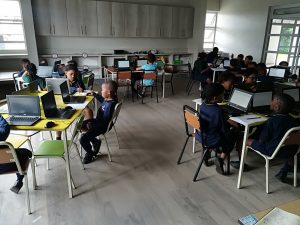
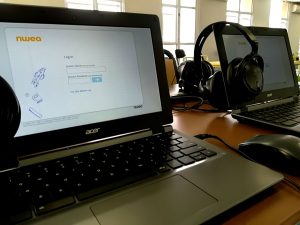
At its core, MAP is a computer-based, adaptive test, with each student being presented with a unique set of questions based on how they respond to prior questions.  The assessment is focused on measuring growth over time.  As such, learners take an assessment at the beginning of the year, in the middle of the year, and the end of the year.  MAP software is able to determine growth goals based on the initial assessment and then measure progress.  For our internal purposes, we are able to measure the growth of students over time, allowing us to see what impact we are having and how we, as an organisation, can continue to improve.  


Global Benchmark


Over the past 20 years, NWEA has been refining their assessment tools, as well as collecting data across the globe that allows them to predict what academic growth should look like in schools.  Nova Pioneer’s decision to use MAP was due, in part, to the length of time NWEA has been refining the assessment, the fact that learners can take the assessment online allowing us easier administration across South Africa and Kenya, and the wealth of data we can use to compare our performance against 145 other countries.  Ultimately, like Nova Pioneer, MAP shares our deep commitment in measuring the growth of children, not just their endpoint.  


Why MAP?

Our shared mission as Nova Pioneer is to build a network of high-quality schools across the continent that are fostering the next generation of innovators and leaders.  We currently operate 13 schools across South Africa and Kenya, and central to our work is using global best practices to build a coherent and powerful curriculum.  In our primary schools, in addition to being grounded in the Cambridge Standards, we also use leading world programming, like Singapore Maths, to further deepen learning and competency building in our students.

Another core component of our vision is in making sure that all students grow academically while they are with us.  This growth is measured in a number of ways, including termly assessment, verbal communication, written communication, portfolios, reading growth assessments, etc.  We seek to have multiple points of contact in what and how students are learning so that we can continue to support their accelerated and meaningful growth.  A key part of that constellation of assessments that allow us to get a picture of how students are doing is an assessment called MAP.   


How will we be able to use MAP in 2020 and beyond?


We are excited to collect the MAP data this year, not so much to assess beginning to end of year growth (although it will help us determine that), but rather to get clearer on the ways in which we can best support student growth and achievement in 2021 and beyond.

We are seeing data from all around the world that the interruption to schooling will have created learning gaps for learners around the globe.  At Nova Pioneer, we have seen the extraordinary efforts of our families, central learning design team, teachers and school leaders come together to make sure that learners had as much normalcy and support in their learning during COVID 19.  

We are confident that the measures that we have put in place to support teaching and learning during school closure, and then the staggered return to school, have supported our learners in moving forward with their curriculum coverage and skill-building.  

However, we do not doubt that the interruptions will have caused gaps in skills that we would be able to address more meaningfully had students been in school as in a normal year.  

To that end, we are excited to administer and then dive into the MAP data that this end of year assessment will generate for every child. Each teacher will be able to get a report outlining the concepts and skills that each learner has mastered and the ones that they will need more support for in the 2021 school year.  

We will be able to use this internationally benchmarked and external assessment to get a clear mirror to reflect what has been learned and what needs more support, and we will be able to use that data to inform practical, thoughtful and targeted interventions for our learners in 2021.  

This will, of course, be one of the many pieces of information we will use to support young Novaneers in 2021 and one of the many ways we live out our commitment to making sure that we are a data-driven organization.

The new normal, learning through COVID-19

The excitement has been mounting as we finally welcomed back our learners onto campus. It is important to note however that even though teaching and learning have resumed on campus, we are continuing to teach on our online platform in order to cater to our parents and students who have

The excitement has been mounting as we finally welcomed back our learners onto campus. It is important to note however that even though teaching and learning have resumed on campus, we are continuing to teach on our online platform in order to cater to our parents and students who have opted for online learning.  


Preserving our culture


In the midst of washing our hands, sanitising and keeping the distance we are intentional about preserving our culture of community. We have, therefore, created opportunities for interactions between the learners who are back on campus and the learners at home. This is achieved through our live sessions which take place twice a week. Through these,  the learners at home get the opportunity to connect with the learners on campus through Google Hangouts. 


Feelings of anxiety exist


As a result of the COVID-19 lockdown, social restrictions and school closures – feelings of anxiety exist. To cater for these, we have developed a Social and Emotional Learning programme for all students – those who are back on campus and at home. Where teachers, together with our Dean of Students and Psychologist, offer lessons as well as emotional support for feelings associated with COVID-19.

Research published on 14 January 2020 in Frontiers in Psychology states that students need to spend as little as 10 minutes in a natural setting to feel happier and experience reduced anxiety levels. With this in mind, we have planned our lessons in ways which will be of greater benefit to the holistic being of our students. Our grade 6 students at Nova Pioneer, Ormonde have had their English lessons outdoors in our first week back on campus. This allowed them to draw inspiration from their surroundings for their nature poems.


Reggio inspired pedagogy


Reggio Emilia identifies a third teacher for students, in addition to teachers and parents – the environment. With the understanding that students have spent their school holidays in lockdown, we do not want them to feel boxed by keeping them in the classroom all the time. We thus make use of our Reggio inspired pedagogy which encourages student interactions with nature to establish connections with the natural environment.

Thank you to our management team, teachers and learning design team, who have worked tirelessly to ensure that the various needs of all students are met.

Connect with us on all of our social media platforms for updates on how we continue to provide the best educational experiences for Novaneers even during these uncertain times.

Providing learning material to children in vulnerable communities

Nova Pioneer and their Foundation have partnered with the National Association of Change Entities in Education (NASCEE) to provide students from vulnerable communities with learning materials.   Press Release – Recognising that the majority of learners in our country do not have access to internet or smart devices and, as

Nova Pioneer and their Foundation have partnered with the National Association of Change Entities in Education (NASCEE) to provide students from vulnerable communities with learning materials.


Press Release – Recognising that the majority of learners in our country do not have access to internet or smart devices and, as such, are losing valuable teaching time during the school closures and the nation-wide lockdown, Nova Pioneer and their Foundation have partnered with the National Association of Change Entities in Education (NASCEE) to provide learning material to children in vulnerable communities throughout South Africa. 

Nova Pioneer’s materials have contributed to 10 000 printed learning packs distributed to 60 schools as part of the Amakhosi learning programme in KZN.

With COVID-19 continuing to impact people and countries around the world, families everywhere are learning to work remotely. The scale and speed of the shift has turned this into a new challenge for everyone, but especially learners, educators and schools who haven’t had the opportunity to invest heavily in remote-learning. This has been further compounded by the uncertainty surrounding the expected staggered return to school for lower grades.

Nova Pioneer co-Founder and Chief Executive Officer, Chinezi Chijioke says, “While our utmost priority remains the wellness of our employees, learners and families – at Nova Pioneer, we understand the gap this pandemic has created among families who do not have the resources to continue learning at home.”

He adds, “At Nova Pioneer our vision statement calls on us to earn the right to contribute beyond our campuses, to society. There is no more important time than now — as the world comes together to tackle the impact of Covid-19 — for us to find a way to do that.” 

By making their innovative learning material available more broadly, the school group aims to support more students in continued learning during this unprecedented time.

Chinezi says, “We are fortunate as Nova Pioneer to have a skilled learning design team whose work provides us with one path to contributing.  We are thankful for the opportunity to do so, and we hope by sharing our resources we can support the learning of more young developing leaders far and wide.” 

The private school group also recently launched an online platform where non-Nova Pioneer families could access custom-designed and comprehensive weekly learning packs for their children (https://www.novapioneer.com/sa/learning/remote-learning/). 

On the website, parents can find previous curriculum material available for Grades 000 to Grade 7. Parents will be able to download an initial grade-specific learning pack and will receive updated material every two weeks. 

Nova Pioneer’s Chief Academic Officer (CAO), Rahel Wondwossen says the learning packs were specially designed and created in response to the school closure announcement on 15 March. The Nova Pioneer Academic and Learning Design teams worked creatively to find solutions to ensure learning for students continued remotely. 

“We were able to respond as quickly as we did thanks to the work done by our Learning Design team. This team is responsible for designing and creating standardised curriculum, assessments, and lesson plans for all our schools – in Kenya and South Africa – and ensuring there is consistency in learning across all campuses and geographies. This is a unique offering available only to Nova Pioneer families,” Wondwossen explains.

“For the purpose of the school closures, the learning designers prepared at-home work packets for the primary schools’ families to follow the learning timetable at home that has accounted for academic learning time, creative work/art, and physical movement so that learners continue to have a holistic support plan,” she adds, “Additionally, parent-friendly lesson plans have been provided with each section of the timetable that also includes all needed materials and student work.”

According to Wondwossen, the virtual learning programme was created to replicate as much of the in-class experience as possible, with materials that have been both engaging and easily accessible to the majority of our students and their parents or caregivers.