How to Manage Your Child’s Anxiety When Entering Grade 8

There is so much pressure on students to succeed when they first enter Grade 8, so much so that they can miss the opportunity to actually enjoy the journey and the experience of being in high school. At Nova Pioneer we want our students to have a well-rounded high school

There is so much pressure on students to succeed when they first enter Grade 8, so much so that they can miss the opportunity to actually enjoy the journey and the experience of being in high school. At Nova Pioneer we want our students to have a well-rounded high school adaptation – socially and academically. It is important for parents to remember that Grade 8 is not the defining year of your child’s high school career. Grade 8 at Nova Pioneer is a year of adjustment, transition and gradual
growth.

If your child is coming from a CAPS environment (State or IEB), it will take a while for your child to acclimatize to our Cambridge curriculum. But our school has multiple support structures in place to help your child make that curriculum transition a smooth one. All we ask is for parents to allow their children the space and time to progressively make that transition into a new curriculum. The support structures from the school and our educators are there, and the support from parents make a solid partnership that will positively shape the educational experience for our incoming Novaneers.

Transitioning to a Cambridge curriculum

Coming from CAPS and having to transition into a Cambridge curriculum can be challenging for students. It is a demanding curriculum that requires students to have a disciplined work ethic and a willingness to learn. However, our teachers are caring and skilled at supporting our students in their curriculum shift. The Cambridge curriculum is designed to teach students how to learn and to go on learning. Our role goes beyond helping students achieve good results, and it also goes beyond giving students approval for progression to university or employment – we give our students a curriculum that will bring lifelong success in the future. The Cambridge focus is on independent learning. Teachers are the supportive guides on the road to that independence.

Furthermore, our Cambridge curriculum sets up students for independence and allows them to lead. For instance, in the COVID19 climate, making the transition to online learning was not as challenging as it would have been, had we not equipped and trained our Novaneers to lead in their learning process. We train our students in high school to take the lead in the direction of their education. This mentality prepares them for the tertiary environment, which subsequently requires them to have the same
independence when learning. Our Novaneers essentially get a head start from our campuses. Nova Pioneer has resources readily available to make that transformation attainable.

School support system

Your children are not alone, there is always someone there to help with your child’s high school experience at Nova Pioneer. Additionally, there are programmes in place, teachers and coaches designated to support your child’s personal development on campus. Our coaching system provides a space for all students to have a voice in a supportive small group environment. This ensures that no one falls through the cracks. We want our Novaneers to succeed and thus, we encourage parents to enquire about the support structures available at our schools, to assist their children as they experience Grade 8.

We want to ensure that students perform well and we want to ensure that they feel supported and prepared to succeed at
our school. We believe that parents working together with the school forms a support system for our Grade 8 Novaneers. Our alumni are living proof that it is possible and achievable for your child to be successful at our school.

Culture principles

Our culture principles are what guide us at Nova Pioneer. We introduce them early to our Grade 8 students. We’ve found that these principles live in our students long after they leave us, and these principles will guide and support our Grade 8 students as they enter a new stage in their school career. We invite and encourage parents to embrace our culture principles and to look at applying them even at home – Joy of Learning, Greater Together, Always Growing, Servant Leadership, Solutions First and High
Expectations.


 

Investing in the Mindset of a Nova Pioneer Teacher

The way we teach at Nova Pioneer is very different from how other schools teach. Our mission is to develop generations of innovators and leaders who will shape the African Century. Therefore, we recruit teachers who not only have a passion for teaching but are lifelong students who are willing

The way we teach at Nova Pioneer is very different from how other schools teach. Our mission is to develop generations of innovators and leaders who will shape the African Century. Therefore, we recruit teachers who not only have a passion for teaching but are lifelong students who are willing to be taught and are open to learning new ways of teaching.

A teacher at Nova Pioneer needs to embody our ‘Always Growing’ culture principle, which is: always seeking out difficult challenges, share and receive feedback as a gift and see every failure as an opportunity to grow. This particular culture principle is the foundation of a mindset of a Nova Pioneer teacher, and a requirement to being part of the Nova Pioneer teaching team.

Our teachers are Novaneers

Being a Novaneer is not only for our students but for our teachers as well. They value the growth of students, prioritise development, teaching and they care about students achieving their best personal and academic outcomes. Our students are equipped with educators who have gone through a rigorous process to be recruited and trained based on our culture, story, mission, and vision on how to help your child succeed in the 21st Century.

Our core teacher values

We look for teachers that deeply care about the future of students and have the passion to build up our students’ intrinsic potential. We look for teachers that respect and value the views of their students, who come from various backgrounds, whilst being the ultimate facilitator of knowledge in their classrooms. Nova Pioneer values teachers who are not only instructive but who also remember to have fun, by bringing an infectious and positive energy to everything that they do.

A Nova Pioneer teacher is passionate about teaching and making education in Africa great by growing its future leaders. It’s their entrepreneurial spirit of making things happen that allows our teachers to be creative and flex their innovation muscle by solving problems for their team and students. Our teachers have a growth mindset that consistently seeks new ways to do and see things, by collaborating with a team that believes in the joy of learning and high expectations.

Mapping out growth 

At Nova Pioneer, we are always invested in growing and constantly evolving to meet the needs of our students. We believe that we all have room to grow, at every level of the organisation. What that means, is that no matter what role someone is in, they have someone coaching and developing them to help them grow. 

What this looks like for teachers, comes in the form of weekly classroom observations and feedback meetings with their coach, the Dean. These sessions with the Dean allow teachers to focus on their growth areas that they are always working to improve on and master. Also, in these sessions teachers are affirmed on what they do well as educators, which helps reinforce best practices.

Each year, all Nova Pioneer teachers receive a Growth Map, which includes specific targeted areas for them to perform, in alignment with their role and job description. The metrics included in these Growth Maps align with each role’s biggest area of contribution to the success of the school, which for teachers, aligns with their student’s academic performance. 

The Growth Maps also measures teachers’ exhibition of our school’s Core Values and their overall performance as a Novaneer. These annual measures are helpful for teachers because they create opportunities for advancement, both within the classroom and in school leadership roles.

5 Ways Nova Pioneer is reducing its carbon footprint

The global call to save our environment is critical! Nova Pioneer has made it a point to do its bit for the environment and to teach our Novaneers that the future of our planet is in their hands. Although nations are facing a pandemic with Covid-19, taking care of our

The global call to save our environment is critical! Nova Pioneer has made it a point to do its bit for the environment and to teach our Novaneers that the future of our planet is in their hands. Although nations are facing a pandemic with Covid-19, taking care of our environment should be no different this year, as we observe World Environment Day on Saturday, 5 June 2021. At Nova Pioneer we teach our students that the onus lies on each and every individual to take active responsibility to restore our ecosystem.

For this reason, we are committed to finding new innovative ways to reduce our carbon footprint at our campuses. Here are five environmentally friendly ways that we have already started to heal our planet below:


1. We say NO to air conditioners

Air-conditioners are classified as one of the major consumers of electricity. The machines subsequently contribute to air pollution and play a role in ozone depletion. Nova Pioneer schools pride themselves with the use of natural ventilation in their classes and offices to regulate room temperature naturally.


2. We choose environmental friendly lights

LED lights save energy, compared to the traditional light bulb, which has the same light output as an energy-saving LED light. We use low-energy LED lights in all our schools. This helps us reduce a significant amount of energy at our campuses. We also make use of natural light to significantly reduce the amount of electricity usage during the day.


3. What we don’t use, we switch off

Switching off electrical appliances when not in use is not only beneficial in preventing the waste of energy, it also significantly reduces the risk of fire hazards. All our schools switch to dark mode every day after school, to ensure safety at our premises. We switch off all lights and all running electrical appliances that are not in use.


4. We practice the 3 R’s: Reduce, Reuse and Recycle

Three sure ways to eliminate waste and protect your environment are to simply reduce, reuse, and recycle. When we reduce we can save money. When we reuse we can help sustain the environment for future generations. When we recycle we save energy. We are proud advocates of the 3R’s as all our campuses are provided with recycling bins to help sort out litter.


5. Our surrounding spaces are green

Our schools provide our students, staff, and the neighborhoods that we exist in, with attractive and nurturing green spaces. As a result, this promotes greater physical activity for our students. The green spaces at our campuses are also used for enriching activity, learning, and for teaching various aspects of our curriculum.

We encourage our Novaneer parents to also adopt environmentally friendly ways of living in their homes to help us reinstate the culture of looking after the environment in our children.

Source: unep.org

5 Ways to celebrate World Milk Day

World Milk Day was established on the 1 st of June in 2001 by the Food and Agriculture Organisation of the United Nations. This day aims to recognize the importance of milk as a global food, and to celebrate the dairy sector. Given that milk is rich with calcium, a

World Milk Day was established on the 1 st of June in 2001 by the Food and Agriculture Organisation of the United Nations. This day aims to recognize the importance of milk as a global food, and to celebrate the dairy sector. Given that milk is rich with calcium, a mineral that promotes healthy teeth and bones, it can add to a healthy lunchbox for our Novaneers.

Whether with a milk product or a dairy alternative, celebrating World Milk Day can be enjoyed by all. The benefits of milk and dairy products have been actively promoted around the world. Milk is a part of the dairy category in the five food groups – dairy, bread and cereals, vegetables, fruit and meat (or meat alternatives).

The use of milk in food and drink has been a common practice for thousands of years. As many can appreciate, milk is an essential part of some people’s daily diets today.


However, for those who have trouble digesting dairy, here are some non-dairy milk alternatives for you to enjoy on World Milk Day:

– Soy Milk, made from soybean plants
– Almond Milk, made from almonds blended with water
– Coconut Milk, made from the white fleshy part of the coconut soaked in water

Milk is not only for drinking, it is an essential ingredient for other dairy foods such as butter, cream, ice cream, and cheese. Milk can also be found as an ingredient used in other types of foods, such as bread, cakes, cereal, desserts and so much more.

Check out these 5 dairy serving suggestions for our Novaneers to enjoy on World Milk Day:

1. Celebrate World Milk Day with a glass of fresh, cold milk in the morning to kick-start the day.
2. Enjoy a big bowl of cereal full of delicious milk
3. For lunch, why not have a toasted cheese sandwich
4. A glass of chocolate or strawberry milkshake
5. A bowl of ice-cream for dessert

Snap a photo of your child’s milk mustache and tag us on social media. Happy #WorldMilkDay!

Source: worldmilkday.org and daysoftheyear.com

Keep Going, Don’t Stop Running

“So that morning in 1962 I told myself: Let everyone else call your idea crazy… just keep going. Don’t stop running. Don’t even think about stopping until you get there, and don’t give much thought to where “there” is. Whatever comes, just don’t stop” – Phil Knight, Shoe Dog. Over

“So that morning in 1962 I told myself: Let everyone else call your idea crazy… just keep going. Don’t
stop running. Don’t even think about stopping until you get there, and don’t give much thought to where
“there” is. Whatever comes, just don’t stop” – Phil Knight, Shoe Dog.

Over the years, it has become a sentimental Nova Pioneer metaphor to liken the organic growth of the
schools to that of a baby. By gradually opening new campuses, introducing new grade levels and
continuously expanding our horizons, Nova Pioneer has slowly learnt how to crawl, walk and fend for
itself in a fast-changing world. But given the supreme operational and academic performance of the
school in the past year, I would suggest we have gone a step further – Nova Pioneer has been running all
along. In our relentless pursuit of High Expectations, we have definitely done ourselves proud in the most
challenging of times.

On exciting developments, I wish to extend my congratulations to Nova Pioneer Ormonde in electing its first female Student Committee Chair, Zewande Phiri. Having had the honour of being Chair myself in 2019, I firmly believe Zewande’ leadership prowess, social intelligence and stellar academic record make her the immaculate, well-rounded individual needed to lead the school’s student body. I wish her, along with Emmanuel Manzini, Zanele Mlambo, Zainub Butt, Chinedu Edward, Atiyyah Ally and Declan Watson, all the luck, energy and will-power in guiding the student body in this difficult moment in time. The Class of 2021 has always left an uplifting impression on me in demonstrating an unrelenting willingness and enthusiasm for leadership – now embrace your roles as model custodians and servant leaders with the same vigour you have shown over the past 5 years. You are nearing the finish line – keep going, don’t stop running.

In the most challenging of periods in history, Nova Pioneer has successfully adapted to the changes forced by the pandemic. The psychological strength shown by all stakeholders during this difficult period in human history has inspired me beyond comprehension. In the most arduous periods of our short history as a group of schools, we have not lost our values or ethics. In the face of calamity, we have not stopped running. Moreover, the anticipated opening of a secondary school in the Midrand reinforces this truth. In spite of the cataclysmic happenings around us, we have not lost sight of our mission to have 100 schools across Africa within 10 years. I celebrate the global leadership team, school managements teams, ground staff, admin staff, all educators, students and parents for their ‘Solutions First’ approach and unabating efforts to steer the organisation through the darkest of times.

It is no surprise that our alumni, or living founders, are placed in the best universities, colleges and leadership academies on the continent and abroad as well. This speaks to an inherent resilience and intelligence, as well as the infinite post-school possibilities Nova Pioneer offers its students. In this regard, it is imperative that a formally constructed and recognised alumni network across Africa is acknowledged as a necessity. Establishing an official platform for former students to interact, network and collectively find solutions to Africa’s challenges will be a seismic step towards the African utopia we all strive to witness in our lifetime. It is without doubt that creating and revitalising the synergy between Nova Pioneer alumni such as Jeanne Sere, Wairimu Wahome, Ntando Makwela, Phillip Mburu and Taskeen Hoosen, just to name a few, would be a significant stride not only for Nova Pioneer, but the African continent at large. Ensuring access for alumni to a pan-African network of alumni and resources to keep them running beyond the finish line per se of a Cambridge A Level certificate, is a path we ought to explore. This is because, as a pan-African network of schools, we ultimately have a decisive responsibility to develop lasting mechanisms to ensure that our alumni collaborate in creating ground-breaking African solutions for African problems.

Lastly, I wish to extend to you a recommendation to a new platform – The JM Podcast – where we have conversations that will narrate and shape the trajectory of Africa’s future. In the spirit of Greater Together, the podcast will be run by myself and Kagiso Ramaboea, a fellow living founder of Nova Pioneer Ormonde. Furthermore, I am pleased to announce that External Relations Associate Manager at Nova Pioneer Kenya, Robert Omondi, who has recently been offered a scholarship at Duke University, will feature in season one of the podcast alongside Vahin Naka, a student at our Ormonde campus. This podcast is an expression of our vision of a unified, connected and self-reliant Africa. Be sure to integrate an hour of the profound insights and ideas from The JM Podcast into your weekly routine.

My final words to you are – ‘keep going’. Never let up. Whether this be in our personal lives which are fraught with eternal struggle, or your academic or professional career which pushes you to your limits – any aspect of your life which requires your strength and endurance. Never let up. Class of 2021, don’t stop running; put in the extra hours that will guarantee you success. Keep going; you will do it. Nova Pioneer, let’s keep running for the betterment of our continent, of its future and of its people. Let us never lose sight of our crucial role in the unending pursuit of the pioneer dream.

JM
https://anchor.fm/the-jmpodcast

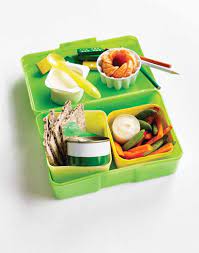
Healthy Lunchbox ideas for school

A healthy, balanced lunch box gives children ‘bounce’ for the playground and brainpower for the classroom. Healthy lunches and snacks are important for children, so it’s worth putting in a little thought about what you send them off to school with. A healthy lunchbox will: Give them sustained energy to

A healthy, balanced lunch box gives children ‘bounce’ for the playground and brainpower for the classroom. Healthy lunches and snacks are important for children, so it’s worth putting in a little thought about what you send them off to school with. A healthy lunchbox will:

  • Give them sustained energy to concentrate and learn at school
  • Help set healthy eating habits for them in the future
  • Mean they have healthy food while they’re at school – where they spend a third of their day

It’s also important to remember that the quality of food you give your child is more important than the quantity. Children need foods that are rich in nutrients such as protein, healthy sources of fat, fibre and vitamin and minerals while drinking plenty of water. These nutrients will help to give children sustained energy. When these nutrients are removed (which is common in many processed foods and sugary drinks) the food is broken down quickly and causes a quick and short release of sugar and energy in the body, leading to a crash in energy.  This crash will leave children feeling tired and unmotivated to learn at school.

A healthy lunchbox should consist of at least one item from the five food groups — bread and cereals, vegetables, fruit, dairy and meat (or meat alternatives). This will give your child a variety of nutritious foods to keep them satisfied and energised.

Here are some suggestions for packing school lunch boxes with nutritious food that your kids will love. Stay healthy Novaneers!


Monday


  • Jigsaw sandwich — egg mashed with mayo, cucumber, lettuce, wholemeal bread (crusts removed)
  • Cheese cubes (about 6-8) with cherry tomatoes (with fun kids’ toothpicks)
  • Small banana * 3 frozen pineapple rings
  • A handful of mini pretzels (25g)
  • High-fiber muesli bar


Tuesday


  • Falafel (or meatball) pita pocket — wholemeal pita pocket (halved), 3 store-bought falafels (halved), cucumber, tomato, lettuce, hummus
  • Trail mix — 30g mixed dried fruit, 1 cup plain popcorn, 2 teaspoons chocolate chips
  • Rainbow fruit skewers — blueberries, watermelon, grapes, pineapple
  • Mini round of cheese with 10 wholegrain rice crackers


Wednesday


  • Ham or chicken, cheese and salad wrap — 1 wholegrain wrap, 40-50g shaved ham or chicken, grated cheese, grated carrot, mixed lettuce
  • Orange — quartered, skin on
  • High-fibre muesli bar (store-bought), cut into 4-5 bite-sized pieces
  • Hard-boiled egg ‘chicks’ — egg halved, eyes and nose made with carrots and raisins
  • Frozen yoghurt tub


Thursday


  • Tuna and crackers — 4 wholegrain crackers, 95g can flavoured tuna, mini fork
  • Trio of veggies and dip — about 1 cup sugar snap peas, carrot sticks, red capsicum sticks, a small tub of hummus (about 2-3 tablespoons)
  • Mandarin / Nectarine 
  • Small tub of flavoured yoghurt


Friday


  • Chicken burritos — grilled chicken, grated cheese, salsa, salad leaves, 2 mini tortillas
  • Heart-shaped pikelets — 4 mini pikelets with cream cheese and fresh strawberries sandwiched together
  • A mix of diced fresh fruit  (around 1 cup total)
  • Sliced cheese and Marmite on 4 wholegrain crackers
  • Frozen two fruits tub


Source: Healthyfood.com 

What to consider when looking for your child’s school 

Looking for a school for your child is never easy and can easily be one of the most stressful things that a parent can go through. There is always so much to consider in the process. In his novel, The Outliers, Malcolm Gladwell points out that parents should focus on

Looking for a school for your child is never easy and can easily be one of the most stressful things that a parent can go through. There is always so much to consider in the process. In his novel, The Outliers, Malcolm Gladwell points out that parents should focus on what type of opportunities they afforded their children as a predictor of future success. The right school that is aligned with your child’s needs is a step in the right direction towards giving them opportunities that will allow them to thrive. Start your search for the best school by thinking about what you want a school to do for your child. 


“We do owe something to parentage and patronage. The people who stand before kings may look like they did it all by themselves. But in fact, they are invariably the beneficiaries of hidden advantages and extraordinary opportunities and cultural legacies that allow them to learn and work hard and make sense of the world in ways others cannot.” (Gladwell 19).


When looking for the best learning environment for your child, you might want to ask yourself the following questions as key guidelines:


  • What do I want my child to learn? This will include the specific subject matter, curriculum, level of academic difficulty, teaching and assessment methods, etc.
  • How does my child learn best? Will the school cater to my child’s particular learning style? Will it cater to their challenges? Will my child be stretched to reach their full academic potential? Does the school incorporate technology and will it equip my child with the skills to survive and thrive in a constantly changing environment?
  • Will the school consider my child’s social needs? How much contact will they have with peers, what does the school bullying policy say? Does the school pay close attention to the social and emotional wellbeing of students? What is the class size and will it allow my child to get more one-on-one attention from the teacher?
  • Will the school be practical for my child and our family? This includes things like the school hours, affordability,  distance and location, scheduling, extracurricular activities, etc
  • How will the school set up my child for University and beyond and equip them with the skills to cope in the real world?
  • Am I, as a parent, prepared to play my role in ensuring that I support the school’s efforts to equip my child in their development? Am I prepared to communicate proactively and positively with the teacher and, where necessary, the school leadership team to resolve challenges? Do I have a realistic view of the needs of my child and am I open to discussing these with the benefit of my child in mind? 


While a lot might depend on the parent and their values, it is important to look at your child’s personality and strengths. Parents might want a school that offers a balance between sports and academics while others might want a school that has a strong focus on either sports or academics. Different children will thrive better in environments that are suited to their personality and individual needs. A lot goes into establishing a school’s approach and model and selecting its curriculum and so, while a good school will communicate with you openly about your needs, it will be more difficult to shift aspects of their model than it is to find the right fit, to begin with. That is why it is important to look for something that complements and supplements who your child is. If you know that your child is a soft-spoken and reserved person, it does not mean that you must put them in a situation where they will never be put on the spot, but rather, you should put them in a situation where they can learn to be OK with being put on the spot. 


The school’s behaviour policy is also something parents consider highly. Some parents might value the whole structured discipline approach while others want a school that encourages and values the student voice interactive structure and follows the preventive, supportive and corrective approaches. Children today will thrive in an environment that gives them a student’s voice but teaches them how to effectively apply it. They need to be able to say, “This is the outcome I want, these are the tools at my disposal, how can I get to my desired outcome?” A child that does not see that there is an option, a child who is told that they cannot make a mistake and that it is not acceptable to make mistakes, a child who struggles to negotiate their circumstances will battle to cope in this generation. This is also why some parents are against schools that encourage rote learning but instead choose schools that allow their children to question things, children who take interest in the process instead of just the end product. These schools that teach students critical thinking and allow students to identify problems and come up with solutions will excel in the future. 


In a nutshell, there is no ‘perfect’ or ‘right’ way of choosing your child’s school. Always think about what will work best for your child’s personality, strengths, needs and interests. Also, consider how different schools’ cultures and values fit with your family values and family life. Making the right choice now will allow you to focus on supporting your child and their school in doing the best they can to equip them for their future.


How Nova Pioneer integrates Robotics in the classroom

Considering the rapid rise and developments in technology and the introduction of the 4th industrial revolution, it is safe to say, the world will surely be a different place in the future. We will see a lot more automation of some systems, advancements in machine learning and integration of robotics

Considering the rapid rise and developments in technology and the introduction of the 4th industrial revolution, it is safe to say, the world will surely be a different place in the future. We will see a lot more automation of some systems, advancements in machine learning and integration of robotics in our daily lives. Which opens the question, what are we doing today as an educational institution to prepare our kids for that future? 


Robotics is the intersection of science, engineering and technology that produces machines (7STEM), called robots, that are either a substitute (or replication) for human actions. This could be anything from industrial robots, domestic or household machines or even robots/machines designed for social interactions such as automated food ordering machines, etc.


At Nova Pioneer we pride ourselves to be one of the few 21st-century schools that are incorporating Robotics in our day-to-day learning experience. As part of developing students who are future leaders and innovators, it is important that we move with the times and be future-focused by developing a learning experience that will allow our students to be solutions-driven.


Coding and robotics go hand-in-hand, and they’re becoming a more integral part of classrooms across the country  Aside from the excitement students muster when they see a robotics kit or a tiny programmable vehicle, coding and robotics offer a little bit more than a fun classroom experience.


When our students participate in coding and robotics activities, they’re learning fundamental skills such as teamwork and collaboration, problem-solving, the ability to fail forward, persistence and more. The world has evolved and if you don’t move with the times you may end up being redundant, irrelevant and insignificant in society.


Helping students through the subject selection process

As an educator, I know that there are a few pivotal moments that students have to face as they navigate their way through High School. I believe that the IGCSE subject selection for Cambridge students may actually be the most defining moment. The subject choice usually takes place in the

As an educator, I know that there are a few pivotal moments that students have to face as they navigate their way through High School. I believe that the IGCSE subject selection for Cambridge students may actually be the most defining moment. The subject choice usually takes place in the 9th Grade and it’s an intense scene that plays out at schools across the country every year. 


Not always an easy choice

While we, as educators, may see subject selection as a practical and quite technical process, parents usually feel an enormous amount of anxiety at this point in their child’s school career. Because, while some students may have a clearer sense of self and career path at 15 and have done their research around what decisions they need to take at this point, it is important to note that it’s also normal for most 15-year olds to get caught off guard.


Keeping the dream alive vs facing the reality

At Nova Pioneer, there is a selection of teachers who act as advisors assigned to help students with their choice. Getting the students to fill out the selection form is the easy part. The hard part is ensuring they help students make a choice that will best benefit them. 

During this time, advisors have to walk a tightrope as they are faced with having to negotiate an often fraught space that exists between what the child may want versus what their parents want for them versus what the reality of the situation may be. Many-a-times we also find that there may be a conflict in the dreams and desires of the students and what their parents see as a practical way forward for them. 


Take these things into consideration

Students approach me to discuss their subject selection quite often and sometimes during these times, I experience what feels like a wrestling match between my head and my heart. Imagine a scenario where a student reveals they want to study medicine post-secondary school however, their performance (historical and current) doesn’t or may not meet the requirements needed to enter this field? 


There is so much to take into consideration entering these conversations. My intention is to always ensure students don’t leave demotivated and discouraged. Thus, I always try and keep two thoughts in the back of my mind:
  1. Basil, tread carefully for dreams are precious to the dreamer; and  
  2. Try your best to encourage students to have more than one because dreams can be so fragile. 


Guidance sometimes looks like redirection

There may come a time when you have to encourage a student to look at another career path especially when they are sold on another? As an advisor and educator, you have to consider the subject choice package a student may choose and the kind of results they would have to enter their desired field. You also have to consider where their strengths and weaknesses may lie.

For example, while a student may want to study medicine, as their teacher you may know that their strengths lie in creative writing, content production and they embrace the free thought of the arts or humanities. You have to think about how you can subtly probe the depth of their passion for medicine and try to understand why they have chosen that particular field. It is your responsibility, however, to help redirect students without killing their passions so that they feel empowered to win and set up for success.


Help students understand their options

Even when we know a student may do better in another field, with another subject package, we cannot deny them their choice. We also understand that every child deserves to go after their dreams, no matter how ambitious they may seem to us. In the instance a student is determined to take a particular route, despite their performance, we then have the responsibility to advise them on (1) what it would take to win;  (2) what obstacles lie ahead and (3) what safety nets exist should things not work out. The beauty of the Cambridge system is that it has safety nets built into its curriculum – these nets can be triggered by the student, parents or the teacher should the need arise.


On your mark, ready, go!

Following the subject selection process, it is our responsibility to watch the student embark on their journey to a matric exemption. Every step of the way is monitored and interrogated, judgement calls made, advice asked for and given, detours and bridges built, and communications sent to the parents. There are occasions where we have had to burn the original map and start the journey anew. There’s no denying that the latter can be a challenge for both the teacher and the student. What a privilege it is to be involved in such a voyage. 


How does Cambridge enrich this experience?

In the 10th Grade, students partake in the IGCSE examinations set up by Cambridge. When the IGCSE results come out, we are so incredibly fortunate that most of our students clear this hurdle and can progress to the final stage of their schooling. 

For a few, we have to again embark on tough conversations to strategise and replot the path, and yes, sometimes we have to burn the original map and start all over again. This step, when required, is a vital demonstration of the growth mindset. Burning the map is not a failure. It is the discovery of a new pathway for growth; one where the student often comes to the realisation that their passions and talents lie in a direction completely different to the one they once believed was the only path for them.


Parents can help (or hinder) the process

The subject selection process does come with some tension, especially when the chosen path is the desired path of the parent and not the student? This can be a delicate space to navigate when parents and students sit with us and we have to advise on a path that may not be the most favourable to the parents. In those moments, all we can do is (1) lay out our concerns as their educator and advisor, (2) suggest alternatives, (3) try and provide a safe space for the child (normally in a hesitant, fearful whisper) to reveal her dreams and (4) hope that it plants the seed in the mind of the parents as well. These conversations can go either way and whatever the final decision, our role is to construct the timetable and give our students the assurances of academic, and social and emotional support from our team of caring teachers and counsellors.


Advising students to keep their options open

There are really hard moments that lie behind the completion of that subject-choice form. However, my advice is to encourage students to keep an open mind and to have more than one dream. This is my key piece of advice to students at subject-choice time is:

“Be nimble, stay aware, and yes… it is okay to change your mind. Don’t ever allow yourself to be trapped like a mouse in a maze. Pursue one dream at a time, but never stop interrogating it, and never stop reflecting on your own progress. Look at the data that you yourself produce every time you write a test or an exam. Look at the data when you peruse AP scores or tertiary course entry requirements. Again, look at the data when you chat with your teacher or a mentor about your progress. Maintain a sharpness in your peripheral vision so that you can pivot, sooner rather than later, if you know deep down that the light of one dream is fading, and the light of another starts to grow with unexpected brilliance.”

COVID-19 Safety Measures

We have had a wonderful first week of school and have loved reconnecting with our returning learners as well as meeting our newest ones. Thank you to our parents for your continued flexibility and support during the start of the new year as we navigated an online reopening after the

We have had a wonderful first week of school and have loved reconnecting with our returning learners as well as meeting our newest ones. Thank you to our parents for your continued flexibility and support during the start of the new year as we navigated an online reopening after the announcement ​from the Department of Basic Education (DBE).

On Friday, January 22nd, the DBE gazetted that government schools would officially open on the 15th, and independent schools can reopen as of the 1st of February. Given this update, and confirmation from ISASA, we are excited to be able to welcome back all learners to campus effective, 1 February.

Have a look at the precautionary measures that we are taking to keep all students safe, sanitised and socially distanced below.


Some families had previously opted for remote learning through the half term. While Nova Pioneer will continue to be committed to ensuring that all COVID safety measures are adhered to, we understand that some families may be keen to remain on online learning for the foreseeable future.

As such, we will be offering a centralised remote learning opportunity for families who may be interested in remaining online until after the half term, 2 March.


Join the schools that are developing impactful innovators and leaders that will shape the African Century.